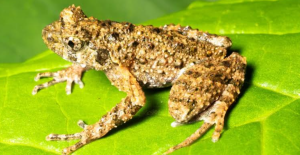
Scientists from Delhi University and Harvard University have uncovered five previously unknown species of small horned frogs in Arunachal Pradesh, a state in Northeast India. This discovery, published in the journal Royal Society Open Science in November 2026, comes after five years of extensive fieldwork across the region.
Exploring the Horned Frogs of Arunachal Pradesh
The newly identified frogs belong to the genus Jingophrys, a group known for their distinctive horn-like projections above the eyes. These frogs are part of the family Megophryidae, often called leaf-litter frogs due to their remarkable camouflage that helps them blend into forest floors. The discovery highlights the rich biodiversity of Arunachal Pradesh, a region that remains relatively unexplored in terms of amphibian diversity.
Key Discoveries and Species Details
- Jingophrys tanogogo: This species is notable for being India’s first documented snail-eating frog. Using advanced 3D micro-CT imaging, researchers found entire land snail shells inside its digestive system, marking the first recorded instance of snail-eating behavior in the Megophryidae family.
- Jingophrys taniitatii: Named in honor of the Tanii tribe from the Ziro Valley, reflecting the close relationship between local communities and the region’s wildlife.
- Jingophrys siangensis: This species carries the name of the Siang region, emphasizing the geographical diversity of these frogs.
- The name tanogogo is derived from the Apatani language word for snails, linking the species’ unique diet to local culture.
- The research team was led by Dr. Sonali Garg from Harvard University’s Museum of Comparative Zoology, with significant contributions from senior professor S.D. Biju and doctoral researchers Tage Tajo and Radhakrishna Upadhyaya K of Delhi University.
- The study suggests that the diversification of horned frogs in this region coincided with the geological rise of the Himalayas and the intensification of the Asian monsoon over millions of years.
Why This Discovery Matters for Biodiversity and Science
These findings deepen our understanding of amphibian diversity in the Himalayas and Northeast India, regions known for their unique ecosystems but still underexplored scientifically. The discovery of a snail-eating frog expands knowledge about dietary adaptations among amphibians, showing how species evolve to exploit different ecological niches. The use of 3D micro-CT imaging allowed scientists to study the frogs’ diets without harming specimens, demonstrating the value of modern technology in wildlife research.
Moreover, naming species after local tribes and regions underscores the importance of indigenous knowledge and cultural connections to biodiversity conservation. This research also sheds light on how geological and climatic changes have shaped species evolution, providing insights that can inform conservation strategies amid environmental changes.
Frequently Asked Questions
Q: What makes Jingophrys tanogogo unique among frogs?
A: Jingophrys tanogogo is the first snail-eating frog documented in India and the first in its family to show this diet, confirmed by 3D imaging of snail shells in its gut.
Q: How were these new frog species discovered?
A: Researchers conducted five years of field explorations in Northeast India, combining traditional fieldwork with advanced imaging techniques like micro-CT scanning to identify and study the frogs.
Q: Why is Arunachal Pradesh important for amphibian research?
A: Arunachal Pradesh’s diverse habitats and relatively unexplored ecosystems make it a hotspot for discovering new species, contributing valuable knowledge to biodiversity and conservation efforts.