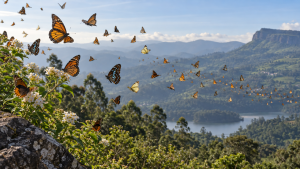
In mid-November 2026, the Nilgiris district witnessed a remarkable natural event as thousands of butterflies migrated westward across its skies. On November 18 and 19, observers recorded more than 100 butterflies passing per minute, marking the most significant migration in six to seven years. This large-scale movement was closely monitored by hundreds of volunteers from the Wynter-Blyth Association, who have been tracking the migration since it began in mid-September.
Butterfly Species and Migration Path
The migration primarily involved two groups of butterflies: the brush-footed butterflies, scientifically known as Nymphalidae, and the milkweed butterflies, classified under Danainae. Among the species spotted were Blue Tigers, Dark Blue Tigers, Crows, and Emigrants. These butterflies traveled across diverse terrain, including valleys, knuckle ridges, and mountain passes such as the Kallar-Coonoor gap. Their journey led them toward the western coastal regions of India, including the states of Kerala and Karnataka. Sightings of migrating butterflies were also reported as far north as Pune, south beyond Kanyakumari, and even reaching Sri Lanka.
Seasonal Migration Patterns in Southern India
Southern India experiences two major butterfly migrations annually. Between February and May, butterflies move eastward from the Western Ghats, while from September to November, they migrate westward toward the Western Ghats. The 2026 migration coincided with the Northeast Monsoon, a seasonal weather pattern that influences the movement of many species. In October, thousands of Blue Tigers and Dark Blue Tigers were seen migrating from the Eastern Ghats and central plains toward the Western Ghats, including the Nilgiris region.
Key Facts About the Migration
- The Dark Blue Tiger butterfly constitutes approximately 78% of the butterfly population during the migration season in southern India.
- Both male and female Dark Blue Tigers migrate in roughly equal numbers, indicating no significant sex-based difference in migration behavior.
- Brush-footed butterflies (Nymphalidae) are often called four-footed butterflies because they stand on four legs while their other two legs are curled up and not used for walking.
- The milkweed butterflies (Danainae) were previously classified as a separate family known as Danaidae but are now grouped within the Nymphalidae family.
Why This Butterfly Migration Matters
Butterfly migrations like the one observed in the Nilgiris are important indicators of environmental health and biodiversity. These movements help maintain genetic diversity among butterfly populations and support ecosystem balance by aiding pollination across regions. The large numbers seen in 2026 suggest favorable environmental conditions but also highlight the need for continued monitoring, as changes in climate or habitat could disrupt these natural patterns. Conservation efforts benefit from such data, helping protect both butterflies and the habitats they depend on.
Frequently Asked Questions
Q: What causes butterflies to migrate in southern India?
A: Butterfly migration in southern India is influenced by seasonal changes, particularly the monsoon cycles. The Northeast Monsoon triggers westward migration from September to November, while the period from February to May sees eastward movement.
Q: Which butterfly species are most common in this migration?
A: The Dark Blue Tiger butterfly is the most dominant species during migration, making up about 78% of the population. Other species include Blue Tigers, Crows, and Emigrants.
Q: How do volunteers monitor butterfly migrations?
A: Volunteers observe and count butterflies at key locations like mountain passes and valleys, recording data on species, numbers, and timing to track migration patterns over time.