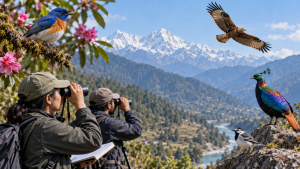
The Uttarakhand Bird Count (UBC-2026), a two-day event supported by the Uttarakhand Forest Department, wrapped up on November 15, 2026, with a total of 394 bird species recorded throughout the state. This extensive survey saw participation from more than 90 registered birdwatchers and over 50 organizations, who collectively submitted 1,010 checklists covering all 13 districts of Uttarakhand.
Understanding the Uttarakhand Bird Count
The Uttarakhand Bird Count is an annual citizen science initiative aimed at documenting the diversity of bird species across the state. It encourages bird enthusiasts, researchers, and conservation groups to observe and record bird sightings over a set period. The data collected helps track changes in bird populations, informs conservation strategies, and raises awareness about the region's avian biodiversity. Uttarakhand, known for its varied habitats ranging from the Himalayan foothills to river valleys, hosts a rich array of birdlife, making such surveys critical for ecological monitoring.
Highlights and District-wise Bird Records
- Nainital district reported the highest number of species, with 273 different birds observed.
- Dehradun district followed closely, recording 241 species.
- Pauri Garhwal district documented 210 species.
- The overall count of 394 species in 2026 was slightly lower than previous years, with 408 species recorded in 2025 and 399 in 2024.
- Experts noted that variations in observer participation and environmental conditions during the survey can influence the total species count.
Related Bird Surveys and Conservation Efforts in Uttarakhand
Beyond the UBC, several other bird monitoring and conservation projects have taken place in Uttarakhand this year. On January 18, the Asian Waterbird Census recorded 5,806 individual birds from 126 species at the Asan Conservation Reserve. Notably, endangered species such as the Steppe Eagle and Egyptian Vulture were observed, with the Ruddy Shelduck being the most numerous, tallying 983 individuals.
Starting June 1, the Haldwani Forest Division launched an innovative project using artificial intelligence and acoustic recorders to monitor bird biodiversity. This technology aims to protect rare bird habitats by providing continuous and detailed data on bird presence and activity.
Additionally, WWF-India conducted a Raptor Conservation Programme between January and March, which included field surveys in Uttarakhand. This initiative focused on improving knowledge about raptor species diversity and their distribution patterns in the region.
Why These Bird Counts Matter for Uttarakhand’s Ecology
Regular bird counts like the UBC provide vital information about the health of ecosystems. Birds are sensitive indicators of environmental changes, so shifts in their populations can signal broader ecological impacts. Tracking species diversity helps identify areas needing conservation attention and supports efforts to protect endangered birds.
Moreover, involving local communities and organizations in these surveys fosters environmental stewardship and education. The data collected contributes to national and international biodiversity databases, aiding global conservation initiatives.
Technological advances, such as AI-based acoustic monitoring, are enhancing the ability to gather accurate and comprehensive data, making future conservation efforts more effective.
Frequently Asked Questions
Q: What is the Uttarakhand Bird Count?
A: It is an annual two-day survey organized to document bird species across Uttarakhand, involving citizen scientists and organizations to monitor avian biodiversity.
Q: Which district recorded the most bird species in 2026?
A: Nainital district recorded the highest number with 273 species observed during the 2026 count.
Q: What other bird conservation activities are happening in Uttarakhand?
A: Besides the bird count, there are projects like the Asian Waterbird Census at Asan Conservation Reserve, AI-based acoustic monitoring in Haldwani, and WWF-India’s Raptor Conservation Programme.