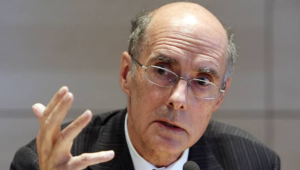
Strobe Talbott, a pivotal figure in shaping India-US relations following India’s 1998 nuclear tests, died on Thursday, November 26, 2026, at his home in East Hampton, New York. He was 80 years old and had been battling a prolonged illness, according to his son, Devin Talbott.
Talbott’s diplomatic efforts during a critical period helped ease tensions between the two nations and laid the groundwork for future cooperation in civilian nuclear energy. His career spanned journalism, government service, and think tank leadership, reflecting a lifelong commitment to international diplomacy and policy.
Leading Post-Pokhran Strategic Dialogues
Serving as the US Deputy Secretary of State from 1994 to 2001 under President Bill Clinton, Talbott played a central role in managing the fallout from India’s nuclear tests in May 1998, known as Pokhran-II. In the aftermath, he conducted 14 rounds of strategic dialogues with India’s External Affairs Minister Jaswant Singh between 1998 and 2000. These talks took place across seven countries and were instrumental in restoring bilateral relations strained by the nuclear tests.
The dialogues addressed complex issues surrounding nuclear non-proliferation and cooperation. Talbott’s efforts helped pave the way for the landmark India-US civilian nuclear agreement, which was finalized in 2005. This agreement allowed India to engage in civilian nuclear trade while maintaining its nuclear weapons program, a balance achieved through several key provisions.
Frameworks Shaping Civilian Nuclear Cooperation
The 2005 framework, which Talbott’s negotiations helped initiate, required India to separate its civilian and military nuclear facilities. All civilian nuclear sites were placed under International Atomic Energy Agency (IAEA) safeguards, ensuring transparency and non-proliferation compliance. However, the agreement excluded the transfer of sensitive enrichment and reprocessing technologies to India, addressing US concerns about nuclear proliferation.
To implement the deal, several steps were necessary: amendments to US domestic laws, an Indian plan for separation of nuclear facilities, a unique safeguards agreement with the IAEA tailored to India’s nuclear program, and an exemption from the Nuclear Suppliers Group (NSG). These complex legal and diplomatic maneuvers underscored the significance of Talbott’s groundwork in the late 1990s.
From Journalism to Policy Leadership
Before his tenure in government, Talbott spent over two decades as a journalist at Time magazine, specializing in Soviet-American relations during the Cold War. His deep understanding of global power dynamics informed his approach to diplomacy. After leaving government service in 2001, he served as president of the Brookings Institution, a leading US think tank, from 2002 to 2017, influencing policy debates on international affairs.
Bill Clinton remembered Talbott as a "good and brilliant man who made our world more peaceful and secure," highlighting his enduring impact on global diplomacy. Talbott’s legacy remains especially significant in the context of India-US relations, where his efforts contributed to a strategic partnership that continues to evolve.