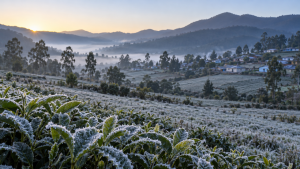
The Nilgiris district in Tamil Nadu recorded its first ground frost of the season on the morning of November 18, 2026. The hill station of Udhagamandalam, commonly known as Ooty, saw temperatures dip to a minimum of 5.9°C, marking an earlier onset of frost than usual for the region.
Understanding Ground Frost in the Nilgiris
Ground frost occurs when the temperature of surfaces such as grass, plants, and vehicles falls below the frost point of the surrounding air, causing water vapor to deposit directly as ice crystals. This phenomenon typically happens in the Nilgiris between December and January, with frost intensifying after mid-December. However, this year’s frost arrived sooner, covering various locations including Ooty Kandal Triangle, Thalaikundha, Lovedale, Race Course Ground, the Government Botanical Garden, and the High-Range Plantation Forest (HPF).
Frost formation is distinct from rime, which forms rapidly from supercooled water droplets, whereas frost develops through direct vapor-to-ice deposition without passing through a liquid phase. The Nilgiris’ unique topography, with its valleys and hollows, creates frost pockets where cold air settles, intensifying frost conditions in these low-lying areas.
Key Details About the Frost Event
- Minimum temperature recorded in Ooty was 5.9°C on November 18, 2026.
- Frost was observed on grasslands, trees, vehicles, and plants, especially near wetlands.
- Locations affected include Ooty Kandal Triangle, Thalaikundha, Lovedale, Race Course Ground, Government Botanical Garden, and HPF.
- Frost usually occurs from December to January but arrived earlier this year.
- In December 2025, Thalaikundha experienced severe frost with temperatures dropping to −1°C, impacting agriculture.
- Early-morning activities were disrupted, with plantation workers and commuters lighting bonfires to stay warm.
How Early Frost Affects the Region
The premature arrival of frost can have significant consequences for the Nilgiris’ agricultural sector, which relies heavily on plantation crops such as tea and vegetables. Frost can damage tender plants and reduce crop yields, posing challenges for farmers. Additionally, the cold conditions disrupt daily routines, particularly for early-morning workers who must contend with lower temperatures and frost-covered surroundings.
Tourism in the Nilgiris often sees a slight increase during frost periods, as visitors are drawn to the scenic frost-covered landscapes. However, the cold also requires residents and tourists alike to take precautions to stay warm. The earlier frost this year may signal changing weather patterns or climatic shifts affecting the region.
Frequently Asked Questions
Q: What causes ground frost to form?
A: Ground frost forms when surfaces cool below the air’s frost point, causing water vapor to deposit directly as ice without becoming liquid first.
Q: How is frost different from rime?
A: Frost develops through direct vapor-to-ice deposition, while rime forms quickly from supercooled water droplets freezing on contact.
Q: Why does frost occur in certain areas more than others?
A: Cold air tends to settle in valleys and hollows, creating frost pockets where temperatures drop lower than surrounding areas, leading to more intense frost formation.