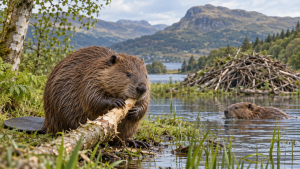
Between 2024 and 2026, a comprehensive survey conducted by NatureScot, Beaver Trust, and the University of Exeter recorded up to 405 beaver territories across Scotland’s Tayside and Forth regions. This marks a substantial increase from previous counts, reflecting the growing presence of beavers in the country. The survey results were published on November 16, 2026, underscoring the success of reintroduction and conservation programs.
Tracking Scotland’s Beaver Comeback
Beavers were once extinct in Scotland, but conservation efforts have aimed to restore their populations due to their important role in ecosystems. The recent survey covered 2,397 kilometers of rivers and streams, identifying more than 20,000 signs of beaver activity such as dams, burrows, and lodges. These signs help researchers estimate the number of territories, which represent family groups of beavers living and breeding in specific areas.
Since 2012, the number of beaver territories has grown dramatically: from just 39 territories then, to 114 in 2017-18, 251 in 2020-21, and now up to 405. This steady increase shows how beavers are successfully establishing themselves in Scottish waterways. Notably, the survey found that about half of the beaver activity now occurs in waterside woodlands, a shift from 41% on agricultural land recorded in 2020-21.
Key Findings from the Beaver Survey
- Territory Numbers: 349 confirmed territories and 56 possible territories were recorded.
- Survey Scope: Teams surveyed nearly 2,400 km of watercourses.
- Signs of Activity: Over 20,000 confirmed signs including dams, lodges, and burrows.
- Habitat Shift: Increased activity in waterside woodlands compared to previous years.
- Population Growth: The annual growth rate of territories has slowed, indicating population stabilization.
- Recent Releases: Between April 2024 and March 2025, 47 beavers were released in Scotland, including protected areas like Cairngorms National Park.
- Genetic Diversity: Eurasian beavers in Scotland belong to two main genetic lineages—western and eastern Eurasian groups.
Why Scotland’s Beaver Recovery Matters
Beavers are known as ecosystem engineers because their dams and lodges create wetlands that benefit a wide range of species. Their dams trap sediment, improve water quality, and help recharge groundwater supplies. These changes also enhance habitats for fish like trout and salmon, which rely on clean, well-oxygenated water.
NatureScot’s mammal adviser, Dr. Roo Campbell, noted that while the rapid growth in beaver territories is slowing, the animals continue to expand into new areas, bringing ecological and social benefits. Beaver Trust’s head of restoration, Dr. Roisin Campbell-Palmer, described the survey as possibly the largest ever conducted on beaver activity, highlighting the scale of ongoing monitoring efforts.
Since 2019, Eurasian beavers in Scotland have been protected under European law, meaning that capturing, killing, or disturbing them or their breeding sites generally requires a license. This legal protection supports the species’ continued recovery and helps balance conservation with human interests.
Frequently Asked Questions
Q: What defines a beaver territory?
A: A beaver territory is usually occupied by a family group consisting of breeding adults, their current year’s kits, and sometimes offspring from the previous year. These territories are marked by dams, lodges, and burrows.
Q: How do beaver dams benefit the environment?
A: Beaver dams trap sediment, improve water quality, recharge groundwater, and create habitats that increase food and shelter for fish such as trout and salmon.
Q: Are beavers legally protected in Scotland?
A: Yes, since 2019, Eurasian beavers are a European protected species in Scotland. Any capture, killing, or damage to their breeding sites generally requires a license.