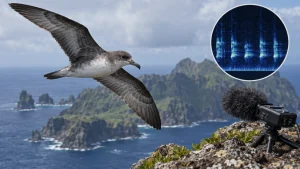
In November 2026, scientists announced they had obtained the only known recording of the call of the Fiji Petrel, a critically endangered seabird with an estimated global population of fewer than 50. This unique audio recording offers a crucial tool for researchers working to locate and protect this elusive species, which is native to Fiji.
How the Recording Was Discovered
The discovery came after conversations with local residents on Gau Island, Fiji, where the bird is believed to breed. The call was recorded from a fledgling found grounded near Nukuloa Primary School. Despite a focused expedition in May 2025 by teams from National Geographic Pristine Seas, BirdLife International, and NatureFiji-MareqetiViti, no visual sightings of the Fiji Petrel were made during that trip.
The recording provides a rare acoustic reference that researchers can now use to identify the bird in its natural habitat, which has been difficult due to its secretive nature and limited numbers.
Understanding the Fiji Petrel and Its Conservation Status
The Fiji Petrel, scientifically named Pseudobulweria macgillivrayi, is also known as MacGillivray’s petrel and belongs to the group of seabirds called gadfly petrels. These birds are known for their pelagic lifestyle, spending much of their time far out at sea, which complicates efforts to study and protect them.
- The species is primarily associated with Gau Island but is thought to disperse widely over open ocean waters.
- It is legally protected under Fijian law, reflecting its status as a threatened species.
- Very little is known about its vocalizations and behavior, making the new recording especially valuable.
Why This Recording Matters for Conservation
Lindsay Young, Vice President of Research for Pristine Seas and leader of the 2025 expedition, emphasized the urgency of conservation efforts, stating, "We’re in a race against time to save the Fiji Petrel." The recording not only aids scientists in detecting the bird but also highlights the importance of local knowledge in conservation research.
By having a clear audio reference, researchers can now better monitor the species’ presence and movements, which is critical for developing effective protection strategies. This breakthrough could help prevent the extinction of one of the world’s rarest seabirds.
Frequently Asked Questions
Q: What is the Fiji Petrel?
A: The Fiji Petrel is a rare seabird native to Fiji, classified as critically endangered with fewer than 50 individuals believed to remain worldwide.
Q: Why is the recording of its call important?
A: The recording provides a unique way to identify and locate the bird in the wild, which is essential for monitoring and conservation since the species is difficult to spot visually.
Q: How does local community knowledge contribute to conservation?
A: Local residents helped researchers find the fledgling whose call was recorded, demonstrating how indigenous knowledge can support scientific efforts to protect endangered species.