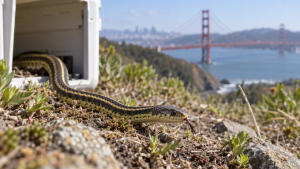
The San Francisco Zoo & Gardens announced on November 10, 2026, the release of 62 captive-bred young San Francisco garter snakes back into their natural habitat. This event marks the first successful head-starting conservation program for this endangered snake subspecies, aiming to restore its population in the wild.
How the Conservation Program Works
The project began in spring 2025 when biologists from the U.S. Geological Survey collected 11 pregnant female snakes from a healthy wild population located in a Midpeninsula Regional Open Space District preserve in San Mateo County, California. These females were brought to the zoo, where they gave birth in a controlled environment designed to protect the vulnerable newborn snakes during their earliest stages of life. After giving birth, the mothers were safely returned to their original habitat.
This method, known as head-starting, involves raising young animals in captivity to improve their survival chances before releasing them into the wild. Each young snake underwent genetic testing to ensure that the released individuals would contribute to genetic diversity in the populations they joined. The release sites were carefully selected and kept undisclosed to protect the snakes from potential threats.
Release Strategy and Conservation Goals
Approximately one-third of the released snakes were returned to the areas where their mothers were originally collected, helping to reinforce those local populations. The remaining snakes were distributed to other populations in need of additional individuals to enhance genetic diversity and population stability.
- The conservation effort involves multiple partners, including the San Francisco Zoo & Gardens, U.S. Fish and Wildlife Service, Midpeninsula Regional Open Space District, U.S. Geological Survey, National Park Service, and California Department of Fish and Wildlife.
- In 2026, over 130 additional young snakes were born at the zoo and are being raised for a planned release in 2027.
- The long-term goal is to establish at least 10 robust, self-sustaining breeding populations, each with a minimum of 200 snakes, to allow the species to be removed from the endangered list.
Why This Release Is Important for the Species
The San Francisco garter snake is a colorful subspecies of the common garter snake (Thamnophis sirtalis) and is recognized as endangered due to habitat loss and other environmental pressures. It avoids brackish marshes because its main prey, the California red-legged frog, cannot survive in salty water. Adult snakes primarily feed on these frogs, while juveniles rely more on Pacific treefrogs.
By raising young snakes in captivity and releasing them into carefully chosen wild locations, conservationists aim to increase survival rates during the snakes’ most vulnerable stages. This approach helps boost population numbers and genetic health, which are critical for the species’ recovery and long-term survival.
Frequently Asked Questions
Q: What is head-starting in wildlife conservation?
A: Head-starting is a conservation technique where young animals are raised in captivity during their most vulnerable early life stages to improve their chances of survival before being released into the wild.
Q: Why is the San Francisco garter snake endangered?
A: The species faces threats from habitat loss, environmental changes, and limited prey availability, which have reduced its population and distribution.
Q: How does genetic testing help in snake conservation?
A: Genetic testing ensures that released snakes contribute to the genetic diversity of wild populations, which is vital for healthy, resilient populations capable of adapting to environmental changes.