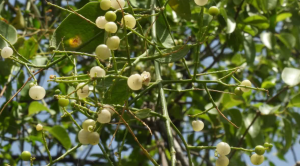
Scientists have identified Salvadora alii, a plant species previously unrecorded in Rajasthan, India. This discovery was confirmed on November 17, 2026, with the species found in multiple districts such as Jodhpur, Jalore, Bhilwara, and Bharatpur. The finding expands the known range of this species and adds to the botanical diversity of the region.
Understanding Salvadora alii and Its Significance
Salvadora alii belongs to the genus Salvadora, part of the Salvadoraceae family. It is locally referred to as Peelu, a name shared with two other Salvadora species already known in Rajasthan: Salvadora oleoides (Meetha Jaal) and Salvadora persica (Khari Jaal). What distinguishes Salvadora alii is its white, juicy ripe fruits, contrasting with the pinkish-red fruits of the other two species. This discovery marks the third Salvadora species documented in the state, enriching Rajasthan’s botanical records.
Details of the Discovery and Distribution
- The research was conducted by Rajasthan-based forest scientists Satish Kumar Sharma, Anil Sarsawan, and Dilip Singh Solanki.
- The findings were published in the Journal of New Biological Reports, Volume 15 (1), on November 17, 2026.
- Salvadora alii was first recorded globally in Pakistan’s Sindh province in 2010.
- Before its identification in Rajasthan, the species had been documented in Madhya Pradesh (2012), Gujarat (2014), Maharashtra (2020), and Uttar Pradesh.
- The research in Rajasthan was motivated by the climatic and ecological similarities between Sindh and Rajasthan, prompting a 16-year study.
Why This Discovery Matters for Rajasthan’s Ecology
The identification of Salvadora alii in Rajasthan highlights the state’s rich and evolving biodiversity. This species’ presence suggests ecological connections across regions separated by national borders, emphasizing the importance of cross-border environmental studies. Additionally, Salvadora species are known for their resilience; for example, Salvadora persica thrives in salty soils and arid conditions, often relying on groundwater. Such traits make these plants valuable for understanding adaptation to harsh environments.
Moreover, Salvadora persica is traditionally used as miswak, a natural chewing stick for dental hygiene, indicating the potential cultural and economic importance of related species like Salvadora alii. The discovery could lead to further research on the uses and conservation of these plants in Rajasthan and beyond.
Frequently Asked Questions
Q: What is Salvadora alii?
A: Salvadora alii is a species of flowering plant in the Salvadoraceae family, recently recorded for the first time in Rajasthan. It is known for its white, juicy fruits and is locally called Peelu.
Q: Where was Salvadora alii found in Rajasthan?
A: The species was documented in the districts of Jodhpur, Jalore, Bhilwara, and Bharatpur.
Q: Why is the discovery of Salvadora alii important?
A: It adds to Rajasthan’s botanical diversity, shows ecological links with neighboring regions, and may have cultural and environmental significance due to its resilience and potential uses.