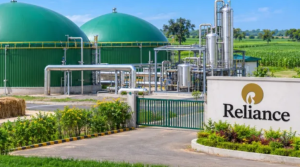
Reliance Industries announced plans to invest approximately ₹15,000 crore (about $1.6 billion) to develop around 100 compressed biogas (CBG) plants throughout India by the year 2030. This initiative was revealed by Vikas Rathi, Chief Financial Officer of Reliance’s Bio Energy Business, during an industry event held on November 17, 2026.
The move aims to significantly expand the company’s footprint in the renewable energy sector, focusing on producing clean fuel from agricultural residues. Reliance currently operates 45 biogas plants in 10 states but plans to more than double this number in the coming years.
Understanding Compressed Biogas and Its Production
Compressed biogas is a renewable energy source created through the anaerobic digestion of organic material such as agricultural waste. This process involves microorganisms breaking down biodegradable matter in the absence of oxygen, producing a gas mixture primarily composed of methane and carbon dioxide, with traces of hydrogen sulphide.
To make biogas suitable for use as a natural gas substitute, it undergoes an upgrading process that removes carbon dioxide and other impurities, enhancing its methane content and energy value. The resulting compressed biogas can then be used for cooking, heating, and as fuel for vehicles, offering a cleaner alternative to fossil fuels.
Key Details of Reliance’s Biogas Expansion
- Target production capacity is about 5 million cubic metres of compressed biogas daily by 2030.
- Current output from 45 plants is approximately 350 metric tonnes of biogas per day, operating below full capacity.
- Plans to commission 10 additional plants by March 2027, increasing daily production to around 1,100 metric tonnes, equivalent to 1.5 to 2 million cubic metres of gas.
- Plants will be strategically located in areas with abundant agricultural residue to ensure steady feedstock supply.
- Produced biogas is sold to city gas distribution companies, which supply households and small industries.
- This expansion supports India’s goal to increase natural gas’s share in the energy mix from 6.2% to 15% by 2030.
Why Reliance’s Investment Matters for India’s Energy Future
Reliance’s large-scale investment in compressed biogas aligns with India’s broader energy transition goals, emphasizing cleaner and more sustainable fuel sources. By utilizing agricultural waste, the initiative not only reduces environmental pollution but also provides farmers with an additional revenue stream and helps manage crop residues that often cause air quality issues when burned.
The planned increase in biogas production will contribute to reducing dependence on imported fossil fuels, enhancing energy security. It also supports the government’s target of expanding natural gas usage, which burns cleaner than coal and oil, thus helping to lower greenhouse gas emissions.
Moreover, the development of biogas infrastructure can stimulate rural economies by creating jobs in plant operations and feedstock collection. As Reliance scales up its biogas plants, it sets a precedent for other companies to invest in renewable energy, accelerating India’s shift toward a greener energy landscape.
Frequently Asked Questions
Q: What is compressed biogas (CBG)?
A: Compressed biogas is a renewable fuel produced by upgrading raw biogas, which is generated through the anaerobic digestion of organic waste. It is purified to remove impurities and compressed for use as a clean energy source.
Q: How does Reliance plan to produce biogas?
A: Reliance will use agricultural residues as feedstock, processing them in anaerobic digesters to produce biogas, which is then upgraded and compressed for distribution.
Q: Why is this investment significant for India?
A: The investment supports India’s goal to increase natural gas usage, reduce pollution from crop residue burning, enhance energy security, and promote sustainable rural development.