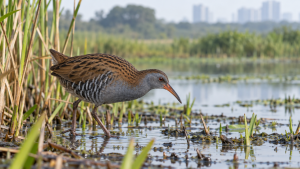
A rare Water Rail (Rallus aquaticus) was observed on November 10, 2026, at the TS Chanakya wetlands located off Palm Beach Road in Nerul, Navi Mumbai. This migratory bird was photographed by wildlife photographer Yash Shetty, drawing attention from birdwatchers who noted it was the first sighting of this species in the area in almost eight years.
Understanding the Water Rail and Its Habitat
The Water Rail is a bird species that breeds across the Palearctic region, which includes parts of Europe and Asia. During the colder months, it migrates to warmer climates, typically arriving in places like the TS Chanakya wetlands from October through February or March. These wetlands, especially the reed beds and marshy areas near Seawoods, provide essential cover and food sources such as insects and other invertebrates that the bird feeds on.
Known for its shy nature, the Water Rail usually stays hidden among dense reeds, avoiding open spaces. Its body is uniquely adapted with a laterally flattened shape that allows it to move easily through thick reed beds. The bird observed by Shetty was estimated to be around two years old, but its sex was hard to determine since males and females look very similar outside the breeding season.
Key Facts About the Water Rail
- Migration Patterns: While northern and eastern populations of Water Rails migrate seasonally, those living in warmer parts of their range tend to stay year-round.
- Physical Adaptations: The bird’s flattened body helps it navigate through dense vegetation in its wetland habitat.
- Diet Changes with Seasons: Water Rails are omnivores, feeding mainly on invertebrates during summer and switching to berries and plant stems in winter.
- Taxonomy: The former subspecies Rallus indicus is now classified separately as the brown-cheeked rail, distinguished by unique markings and a different call.
On November 11, about 50 birdwatchers visited the wetlands hoping to catch a glimpse of the Water Rail, but only nine managed to see it after 10 a.m. The species is currently listed as Least Concern on the International Union for Conservation of Nature (IUCN) Red List, indicating it is not at immediate risk of extinction.
Why This Sighting Matters for Local Biodiversity
The appearance of the Water Rail at TS Chanakya wetlands highlights the ecological importance of these urban green spaces. Wetlands serve as critical stopover points for migratory birds, offering shelter and nourishment during their long journeys. The rarity of this sighting after nearly eight years suggests that maintaining and protecting such habitats is vital for supporting diverse bird populations.
For local birdwatchers and conservationists, this event provides an opportunity to raise awareness about wetland preservation. It also underscores the need for continued monitoring of migratory species, which can be indicators of environmental health and changes in climate patterns.
Frequently Asked Questions
Q: What is a Water Rail?
A: The Water Rail is a shy, marsh-dwelling bird known for its secretive behavior and distinctive flattened body that helps it move through dense reeds.
Q: Why was this sighting significant?
A: This was the first time in nearly eight years that a Water Rail was spotted at the TS Chanakya wetlands, making it a rare and noteworthy event for local wildlife enthusiasts.
Q: Where do Water Rails migrate from and to?
A: Water Rails breed in the Palearctic region and migrate to warmer areas during winter, typically staying from October to March in places like the TS Chanakya wetlands.