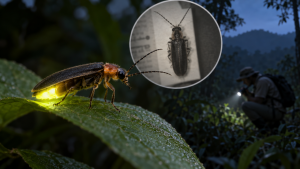
In 2026, scientists confirmed the rediscovery of Pyractomena similis, a rare firefly species that had not been officially recorded in the United States or Canada since 1983. The species was spotted during ecological surveys conducted in a Delaware meadow, marking a significant moment for biodiversity researchers and conservationists.
Delaware State University ecologist and entomologist Christopher Heckscher identified the fireflies at Brandywine Creek State Park, observing between eight and twelve individuals during targeted surveys in May and June. Their distinctive amber flash pattern, consisting of a rhythmic sequence of 10 to 20 pulses, helped confirm their identity.
Rediscovery and Survey Details
The initial sighting of Pyractomena similis in 2026 was actually recorded earlier in May by Aljoscha Nern in Ashburn, Virginia, and shared on the citizen science platform iNaturalist. This sighting prompted further investigation, leading to Heckscher’s confirmation in Delaware. The findings were published in the Journal of Lost Species, which highlights species that have not been documented for decades.
Pyractomena similis is one of 28 firefly species in North America still considered lost or missing. It is also featured on Re:wild’s “Most Wanted” list, a catalog of species that have not been seen for at least ten years and are prioritized for conservation efforts.
Understanding Pyractomena similis and Fireflies
The genus Pyractomena, to which this species belongs, is part of the Lampyridae family, commonly known as fireflies or lightning bugs. This genus includes at least 20 described species, many of which are known for their bioluminescent abilities.
Fireflies produce light through a chemical reaction involving luciferase enzymes that catalyze the oxidation of luciferin. This process requires oxygen and ATP, resulting in the glowing effect that fireflies use for communication and mating signals.
In their larval stage, many fireflies are predators, feeding on small invertebrates such as snails and slugs. They use digestive enzymes to break down their prey before consumption, playing an important role in controlling populations of these creatures in their ecosystems.
Why Rediscovering Pyractomena similis Matters
The rediscovery of Pyractomena similis offers hope for the conservation of other elusive species thought to be lost. It highlights the importance of ongoing field surveys and citizen science contributions in tracking biodiversity.
Finding this firefly after more than four decades suggests that some species may persist in small, overlooked habitats. It also underscores the need to protect these environments from development and pollution to ensure these rare insects can survive.
For scientists, the rediscovery provides an opportunity to study the species’ ecology, behavior, and population status, which can inform conservation strategies. It also raises awareness about the broader challenges facing fireflies, many of which are declining worldwide due to habitat loss and light pollution.
Frequently Asked Questions
Q: What makes Pyractomena similis unique among fireflies?
A: Pyractomena similis is distinguished by its amber-colored flash pattern, which consists of a rhythmic sequence of 10 to 20 pulses, unlike other firefly species.
Q: Why had Pyractomena similis not been seen since 1983?
A: The species likely persisted in small, isolated habitats that were not frequently surveyed, making it difficult to detect until recent targeted efforts.
Q: How does firefly bioluminescence work?
A: Fireflies produce light through a chemical reaction where the enzyme luciferase catalyzes the oxidation of luciferin, using oxygen and ATP to emit light for communication.