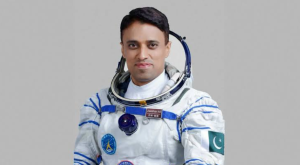
On November 25, 2026, China will launch the Shenzhou-24 spacecraft from the Jiuquan Satellite Launch Center in northwest China. This mission is notable for including Muhammad Zeeshan Ali, a Pakistani payload specialist who will become the first Pakistani astronaut to travel to space and the first foreign astronaut to visit China’s Tiangong space station.
China-Pakistan Space Collaboration Under Belt and Road Initiative
The Shenzhou-24 mission represents a significant milestone in China and Pakistan’s growing cooperation in space exploration. The three-person crew consists of Chinese commander Tang Hongbo, flight engineer Wu Yi, and Muhammad Zeeshan Ali from Pakistan. Ali’s participation is part of the bilateral collaboration under China’s Belt and Road Initiative, which aims to strengthen ties through infrastructure, technology, and scientific partnerships.
As of November 24, 2026, the China Manned Space Agency confirmed that the crew is in good health and all preparations for launch are complete. This mission marks Pakistan’s first direct involvement in a crewed spaceflight, highlighting the country’s expanding role in international space activities.
Mission Details and Scientific Goals
The Shenzhou-24 mission is the 41st flight in China’s crewed space program. It will be launched atop a Long March-2F rocket and will conduct an in-orbit crew rotation with the Shenzhou-23 spacecraft currently docked at the Tiangong station. Muhammad Zeeshan Ali is expected to spend about one week aboard the space station before returning to Earth with two Shenzhou-23 crew members.
Meanwhile, astronaut Zhu Yangzhu will remain on the station for a year-long mission, making him the first Chinese astronaut to undertake such an extended stay in space. The Shenzhou-24 mission will also carry out around 90 scientific experiments and technology demonstrations, contributing to ongoing research aboard the Tiangong station.
Technical Features of the Shenzhou and Tiangong Space Station
- Orbital Module Capabilities: Early Shenzhou missions (2–6) featured orbital modules with independent propulsion, solar power, and control systems. This capability was removed starting with Shenzhou 7.
- Crew Safety Systems: The Long March 2F rocket includes an advanced fault-monitoring and diagnosis system designed to enable quick astronaut escape in emergencies.
- Tiangong Station Layout: The station has a T-shaped configuration, with the Tianhe core module connected to the Wentian and Mengtian laboratory modules.
- Robotic Arms: Tiangong’s Tianhe and Wentian modules each have robotic arms that can be joined to form a 15-meter manipulator for external station operations.
What This Mission Means for Pakistan’s Space Ambitions
Muhammad Zeeshan Ali’s journey aboard Shenzhou-24 is a landmark event for Pakistan’s space program. It symbolizes the country’s entry into human spaceflight and strengthens its scientific and technological ties with China. This collaboration could pave the way for future joint missions and inspire increased investment in Pakistan’s aerospace and research sectors.
For China, hosting its first foreign astronaut aboard Tiangong underscores its expanding role as a leader in space exploration and international cooperation. The mission’s scientific experiments will advance knowledge in microgravity research, technology development, and space station operations, benefiting both countries and the broader space community.
Frequently Asked Questions
Q: Who is Muhammad Zeeshan Ali?
A: Muhammad Zeeshan Ali is a Pakistani payload specialist selected to be the first Pakistani astronaut to travel to space aboard China’s Shenzhou-24 mission.
Q: What is the Tiangong space station?
A: Tiangong is China’s modular space station, featuring a T-shaped design with a core module and two laboratory modules, supporting long-duration human spaceflight and scientific research.
Q: How long will the Shenzhou-24 mission last?
A: Muhammad Zeeshan Ali is expected to spend about one week aboard the Tiangong station before returning to Earth, while another astronaut will remain for a year-long mission.