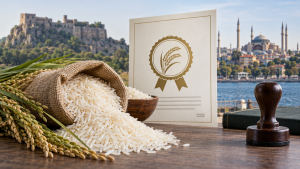
In May 2026, Pakistan achieved a significant milestone by obtaining Geographical Indication (GI) recognition for Basmati rice in Türkiye. This development came after a dispute over India’s application to the Turkish Patent Office, which sought exclusive rights over the Basmati name. Pakistan’s successful claim marks an important victory in the ongoing international debate over the origin and branding of this prized rice variety.
Understanding Geographical Indications and Basmati Rice
Geographical Indications (GIs) are a form of intellectual property that protect products linked to a specific region, ensuring that only producers from that area can use the name. Basmati rice, known for its distinctive aroma and long grains, is traditionally grown in parts of India and Pakistan. Both countries have sought to secure exclusive rights to the name in various international markets, leading to disputes over who can claim the GI status.
Pakistan registered "Basmati" as a GI under its Geographical Indications (Registration and Protection) Act in January 2021, with the Trade Development Authority of Pakistan (TDAP) as the official registrant. This registration supports Pakistan’s claim that Basmati rice is not exclusive to India but is also authentically produced in Pakistan’s designated regions.
Key Details of the Türkiye GI Recognition
- India applied for exclusive GI rights over Basmati rice in Türkiye in April 2023.
- Pakistan responded by mobilizing legal experts from TDAP and leveraging an 18,000-tonne Tariff Rate Quota to assert its claim.
- Following the dispute, Türkiye’s leading retailer, A-101, placed initial orders for Pakistani Basmati rice, signaling market acceptance.
- Promotional activities were held in Ankara to raise awareness and support for Pakistani Basmati.
- Türkiye’s Trade Minister Ömer Bolat expressed support for Pakistan’s Basmati claims during a COMCEC session in Istanbul in November 2026, emphasizing the need for stronger branding in the Turkish market.
Why Türkiye’s Decision Matters for Pakistan and Global Trade
Türkiye’s recognition of Pakistan’s GI claim is a crucial win in the broader contest over Basmati rice’s international branding. It not only opens doors for Pakistani exporters in a key market but also strengthens Pakistan’s position in other ongoing disputes, such as the challenge to India’s 2018 European Union application for exclusive Protected Geographical Indication rights.
The decision also follows a notable ruling in Australia in August 2026, where the Federal Court dismissed India’s appeal to register "Basmati" as a certification trademark, acknowledging that the rice is grown in Pakistan as well. These developments collectively reinforce the idea that Basmati rice is a shared heritage product, not exclusive to one country.
For consumers and producers, the GI status ensures that the quality and origin of Basmati rice are protected, preventing misuse of the name and supporting fair trade practices. It also encourages producers within the designated regions to maintain high standards to qualify for GI use.
Frequently Asked Questions
Q: What is a Geographical Indication (GI)?
A: A GI is a label used on products that have a specific geographical origin and possess qualities or a reputation due to that origin. It protects the product name from being used by producers outside the designated area.
Q: Why is Basmati rice important in GI disputes?
A: Basmati rice is prized for its unique aroma and grain quality. Both India and Pakistan grow it and seek exclusive rights to the name in international markets, leading to legal and trade disputes.
Q: How does Türkiye’s recognition affect Pakistani exporters?
A: The GI recognition allows Pakistani producers to market their Basmati rice under the protected name in Türkiye, potentially increasing exports and market share in this important region.