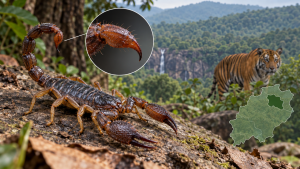
In November 2026, researchers announced the discovery of a new scorpion species named Liocheles similipalensis in the Similipal Tiger Reserve located in Odisha, India. This finding represents the first confirmed presence of the genus Liocheles in the state, expanding knowledge of the region's biodiversity.
Discovering Liocheles similipalensis in Similipal
The newly described scorpion species measures between 44 and 53 millimeters in length and features a glossy, bluish-black exoskeleton. It inhabits rocky areas within tropical moist deciduous forests at an elevation of approximately 1,000 meters above sea level. The discovery was made by a team including Saurabh Kininge, Tejas Thackeray, Prakash C. Gogineni, the Similipal Field Director, and Akshay Khandekar, who conducted field research in the reserve.
Scientific Context and Classification
The research detailing this species was published in the journal Euscorpius in 2026. With this addition, the global count of species in the genus Liocheles has increased from six to seven. Liocheles similipalensis is the fourth species of this genus identified in India. The species belongs to the family Hormuridae within the order Scorpiones. The researchers emphasized the need for further field surveys and DNA-based studies to better understand the species’ distribution and evolutionary relationships.
Key Characteristics and Biological Insights
- Respiratory system: Scorpions possess four pairs of book lungs, each containing around 140 to 150 air-filled lamellae connected to the outside through an atrial chamber and spiracle.
- Reproductive traits: Within the genus Liocheles, L. australasiae is notable for thelytokous parthenogenesis, where females can reproduce without mating, although this has not been observed in L. similipalensis.
- Sensory organs: Scorpions use pectines—comb-like sensory organs on their underside—to detect chemical and mechanical signals from the environment, aiding in navigation and locating mates.
- Ultraviolet fluorescence: The scorpion’s cuticle emits a blue-green glow under ultraviolet light due to compounds in its outer layer, though the exact purpose of this fluorescence remains unclear.
Why the Discovery Matters for Biodiversity
Finding Liocheles similipalensis in Similipal Tiger Reserve highlights the rich and still partially unexplored biodiversity of this protected area. It underscores the importance of ongoing research and conservation efforts in tropical forest habitats, which are home to many unique and potentially undiscovered species. This discovery also contributes to the global understanding of scorpion diversity and evolution, providing new opportunities for scientific study in taxonomy and ecology.
Frequently Asked Questions
Q: What makes Liocheles similipalensis unique among scorpions?
A: It is the first species of the genus Liocheles recorded in Odisha, with distinctive size and coloration, and it inhabits a specific rocky forest environment at high elevation.
Q: How many species are there in the genus Liocheles worldwide?
A: Before this discovery, there were six recognized species globally. Liocheles similipalensis is the seventh and the fourth found in India.
Q: Why is ultraviolet fluorescence important in scorpions?
A: Scorpions fluoresce under UV light due to compounds in their outer layer, but scientists are still researching the biological function of this glow, which might relate to protection or communication.