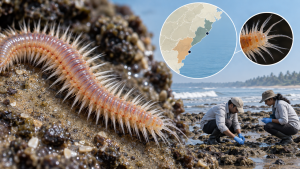
On November 20, 2026, researchers announced the discovery of a new marine bristle worm species named Hypereteone indica. This species was found in the intertidal zones of Udaipur beach in Odisha and Hijli beach in West Bengal. It represents the first new species added to the genus Hypereteone from Indian waters in almost a century, bringing the total number of recognized species in this genus worldwide to ten.
Understanding Bristle Worms and Their Habitat
Bristle worms, scientifically known as polychaetes, are segmented marine worms characterized by bristle-like structures called chaetae. They play important roles in marine ecosystems, particularly in sediment mixing and nutrient cycling. The genus Hypereteone belongs to this group and is known for inhabiting intertidal and shallow marine environments. These worms often live in burrows or under rocks along coastlines, where they contribute to the health of the sediment and surrounding habitats.
The discovery of Hypereteone indica in the intertidal zones of Odisha and West Bengal highlights the rich biodiversity present along India's eastern coastline. These areas are dynamic environments influenced by tides, where many marine species thrive in the fluctuating conditions between land and sea.
Details of the Discovery and Related Findings
- The study was led by Dr. S Balakrishnan from the Zoological Survey of India's Marine Aquarium and Regional Centre in Digha, with collaborators including research scholars S Krishnaraj, Chaiti Manna, and Brazilian scientist Veronica Maria de Oliveira.
- Researchers collected a total of 12 specimens of Hypereteone indica—six from Udaipur beach and six from Hijli beach—during low tide periods in August, September, and December 2025.
- In addition to this discovery, another marine worm species, Paraleocrates indica, was found in the intertidal mudflats of the Champa Estuary in West Bengal during surveys conducted between December 2023 and April 2024.
- Earlier in 2026, two new nereidid worms, Namalycastis solenotognatha and Nereis dhritiae, were identified from West Bengal’s Digha and Bankiput areas. These species have unique adaptations, such as specialized jaws and habitats in sulfide-rich mudflats.
- Berhampur University researchers also discovered a microscopic marine nematode, Ceramonema leduci, off the coast of Gopalpur, Odisha, with findings published in late 2026.
Why This Discovery Matters for Marine Biodiversity
Adding a new species like Hypereteone indica to the known marine fauna of India expands scientific understanding of biodiversity in coastal ecosystems. It underscores the importance of continued exploration and monitoring of marine habitats, especially intertidal zones that are vulnerable to environmental changes and human activities.
Discoveries like this also contribute valuable data for conservation efforts. Knowing which species inhabit these regions helps in assessing ecosystem health and can guide policies to protect fragile marine environments. Furthermore, understanding the biology and behavior of bristle worms aids in studying sediment dynamics and nutrient cycling, which are crucial for maintaining productive coastal waters.
The identification of new species after long intervals also highlights how much remains to be learned about marine life in Indian waters. It encourages collaboration between local and international scientists to uncover hidden biodiversity and better manage marine resources.
Frequently Asked Questions
Q: What is a bristle worm?
A: Bristle worms are segmented marine worms with bristle-like structures called chaetae. They live in various marine habitats and play roles in sediment mixing and nutrient cycling.
Q: Where was Hypereteone indica discovered?
A: This new species was found in the intertidal zones of Udaipur beach in Odisha and Hijli beach in West Bengal along India's eastern coast.
Q: Why is discovering new marine species important?
A: Discovering new species helps scientists understand marine biodiversity, ecosystem health, and guides conservation efforts to protect vulnerable habitats.