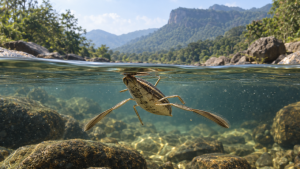
On November 20, 2026, researchers documented a previously unknown species of backswimmer insect, named Enithares deccanensis, in the freshwater ecosystems of the Seshachalam Biosphere Reserve in Andhra Pradesh and the Amrabad Tiger Reserve in Telangana. This discovery adds to the understanding of aquatic biodiversity in the Eastern Ghats region.
Understanding Backswimmers and Their Habitat
Backswimmers belong to the family Notonectidae, a group of aquatic insects known for their unique swimming style. Unlike many other insects, backswimmers swim upside down, using their long, hair-fringed hind legs to propel themselves through water. They are often confused with water boatmen but differ in coloration, limb structure, and predatory habits. These insects typically inhabit freshwater environments such as ponds, streams, and pools, where they play a role as predators in the aquatic food web.
How Scientists Identified Enithares deccanensis
The new species was distinguished through a combination of detailed physical examination and advanced genetic techniques. Researchers conducted morphological studies, noting distinctive features like a dark, V-shaped marking on the wings and a sickle-shaped reproductive structure in males. They also performed DNA barcoding and phylogenetic analysis, which revealed a genetic divergence of 10 to 14.5 percent from closely related species. The specimens were found in both light and dark color variations. This comprehensive approach was documented in a study published on November 16, 2026, in the Journal of Natural History.
- Distinctive markings: Dark V-shaped pattern on wings.
- Male anatomy: Unique sickle-shaped reproductive organ.
- Genetic difference: 10–14.5% divergence from related species.
- Color forms: Both light and dark variants observed.
Why This Discovery Matters for Biodiversity
The identification of Enithares deccanensis highlights the rich and still largely unexplored freshwater biodiversity in the Eastern Ghats. Researchers from the Zoological Survey of India and VHNSN College emphasize that habitats like shaded rock pools, forest streams, and waterfall pools often harbor species yet to be documented. This discovery underscores the importance of conserving these fragile ecosystems, which support unique and diverse life forms. It also demonstrates how combining traditional taxonomy with modern genetic tools can uncover hidden species, contributing to better ecological knowledge and conservation strategies.
Frequently Asked Questions
Q: What is a backswimmer?
A: A backswimmer is an aquatic insect that swims on its back using long, hair-fringed hind legs. It belongs to the family Notonectidae and is known for its predatory behavior in freshwater habitats.
Q: Where was Enithares deccanensis discovered?
A: This new species was found in freshwater habitats within the Seshachalam Biosphere Reserve in Andhra Pradesh and the Amrabad Tiger Reserve in Telangana, both part of the Eastern Ghats region.
Q: How do scientists differentiate backswimmer species?
A: Researchers use a combination of physical characteristics, such as wing markings and reproductive structures, along with genetic analysis like DNA barcoding and phylogenetic studies to identify and distinguish species.