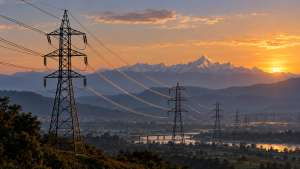
On November 17, 2026, India’s Central Electricity Authority granted permission to the Nepal Electricity Authority (NEA) to import up to 350 megawatts (MW) of electricity from India. This approval is valid until July 31, 2027, and allows Nepal to purchase power from the Indian Energy Exchange (IEX) for up to 17 hours daily at competitive rates. The move aims to help Nepal manage electricity demand during periods of reduced domestic generation.
Why Nepal Needs to Import Electricity
Nepal relies heavily on hydropower generated from its rivers, particularly through run-of-the-river projects that do not have large reservoirs to store water. This means electricity production fluctuates with seasonal river flows, often declining in winter months. Additionally, recent floods in the Bhote Koshi and Trishuli river systems in Rasuwa district have damaged infrastructure, disconnecting about 431 MW of hydropower capacity from Nepal’s national grid. These factors create a power shortfall, especially during colder months when demand remains high.
To bridge this gap, Nepal’s electricity authority has sought to import electricity from India, which has a more diverse and stable power supply. The approval to import up to 350 MW will help ensure a steady electricity supply during these challenging periods.
Details of the Electricity Import Arrangement
- Out of the total 350 MW approved, 300 MW will be transmitted via the 132 kV transmission lines connecting Kataiya-Kushaha, Ramnagar-Surajpura, and Raxaul-Parwanipur.
- The remaining 50 MW will be imported through the 132 kV New Nautanwa-Mainahiya transmission line.
- Electricity imports are restricted during peak demand hours in Nepal, specifically from 5 am to 8 am and 5 pm to 9 pm, to avoid overloading the grid.
- NEA can purchase electricity from the Day-Ahead and Real-Time markets of the Indian Energy Exchange, which operate using closed auctions with two-sided bidding and uniform pricing.
- Alongside imports, NEA has also received approval to export 56 MW of surplus electricity generated by three hydropower projects back to the Indian market during the same period.
How This Import Approval Affects Nepal’s Power Sector
The authorization to import electricity is a strategic response to seasonal and disaster-related challenges faced by Nepal’s power system. It provides a buffer to maintain reliable electricity supply during winter when hydropower output declines. By accessing India’s energy markets, Nepal can buy power competitively and avoid blackouts or load shedding that could affect households and businesses.
Furthermore, as river flows increase from mid-April 2027, Nepal expects domestic hydropower generation to improve. This could reduce the need for imports and even allow Nepal to export surplus electricity, generating additional revenue and strengthening cross-border energy cooperation.
NEA’s ability to both import and export electricity highlights its role as a key utility managing generation, transmission, and distribution under government oversight. This flexibility supports Nepal’s goal of energy security and regional integration in South Asia’s power markets.
Frequently Asked Questions
Q: Why does Nepal need to import electricity from India?
A: Nepal’s hydropower generation depends on river flows, which decline in winter. Flood damage to infrastructure also reduces capacity, creating a shortfall that imports help to fill.
Q: How much electricity can Nepal import under this approval?
A: Nepal is allowed to import up to 350 MW of electricity from India until July 31, 2027.
Q: Can Nepal export electricity to India as well?
A: Yes, NEA has approval to export 56 MW of electricity generated by domestic hydropower projects to the Indian Energy Exchange during the same period.