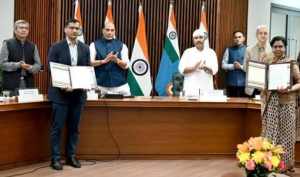
On November 16, 2026, the Ministry of Defence, represented by the Directorate General of Defence Estates (DGDE), and the Ministry of Social Justice and Empowerment signed a Memorandum of Understanding (MoU) in New Delhi. This agreement focuses on enhancing welfare services for senior citizens residing in cantonment areas across India. Defence Minister Rajnath Singh and Union Minister Dr. Virendra Kumar attended the signing ceremony.
Improving Senior Citizen Facilities in Cantonments
The MoU outlines plans to establish new day-care centres and senior citizen homes, upgrade existing facilities, and provide specialized training for caregivers who work with the elderly. Specific locations identified for new day-care centres include Barrackpore, Belgaum, Jhansi, Khadki, Pune, Secunderabad, St. Thomas Mount, and Delhi. Meanwhile, centres in Ambala, Deolali, Jabalpur, Ranikhet, and Lansdowne, along with senior citizen homes in Ayodhya and Lucknow, are slated for enhancement.
How the Agreement Will Be Implemented
The Ministry of Social Justice and Empowerment will supply financial support through the Atal Vayo Abhyudaya Yojana (AVYAY) scheme to establish, operate, and maintain these welfare facilities. Additionally, the ministry will offer technical guidance and operational assistance. The DGDE and local cantonment boards are responsible for providing appropriate premises and necessary infrastructure. Caregiver training programs will be conducted in about 12 cantonments, including Pune, Khadki, Deolali, Delhi, Ambala, Ferozepur, and Jalandhar. These training initiatives aim not only to improve care quality but also to create employment opportunities for local youth. Defence Minister Rajnath Singh emphasized the importance of conducting social audits of these centres and homes to ensure ongoing service improvements.
Understanding the Cantonment Welfare Framework
- Role of DGDE: The Directorate General Defence Estates is an attached office under the Ministry of Defence that manages defence land and oversees cantonment administration through local boards.
- Cantonment Boards: These are statutory local bodies governed by the Cantonments Act, 2006. They include elected civilian members and nominated officials, including military representatives, responsible for local governance in cantonment areas.
- Atal Vayo Abhyudaya Yojana (AVYAY): AVYAY is a comprehensive scheme that includes programs such as the Integrated Programme for Senior Citizens, Rashtriya Vayoshri Yojana, and the Senior-care Ageing Growth Engine initiative, all aimed at improving the quality of life for elderly citizens.
Why This MoU Matters for Cantonment Residents
This partnership marks a significant step toward addressing the needs of senior citizens living in cantonment areas, where military and civilian populations coexist. By expanding and upgrading welfare facilities, the government aims to provide better healthcare, social support, and recreational opportunities for older adults. The caregiver training component also seeks to build local capacity, ensuring that care providers are well-equipped to meet the unique challenges of geriatric care. Furthermore, the focus on social audits reflects a commitment to transparency and continuous improvement, which could serve as a model for similar initiatives nationwide.
Frequently Asked Questions
Q: What is the main goal of the MoU between the Defence and Social Justice Ministries?
A: The MoU aims to enhance welfare facilities and services for senior citizens living in cantonment areas across India through new centres, upgraded homes, and caregiver training.
Q: Which scheme will fund the welfare facilities under this agreement?
A: The Atal Vayo Abhyudaya Yojana (AVYAY) will provide financial assistance for establishing, operating, and maintaining the senior citizen welfare facilities.
Q: What role do cantonment boards play in this initiative?
A: Cantonment boards will provide suitable premises and essential infrastructure for the welfare centres and homes, supporting the implementation of the MoU locally.