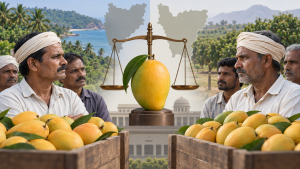
Mango growers from Maharashtra’s Konkan region and Gujarat’s Valsad district are locked in a dispute over the use of the name “Hapus” for Alphonso mangoes. As of November 24, 2026, the Geographical Indications (GI) Registry has concluded hearings on Gujarat’s application for a separate GI tag for “Valsad Hapus,” with a final decision still awaited.
The conflict centers on the recognition and exclusive rights to use the “Hapus” name, which has long been associated with the Alphonso mangoes grown in Maharashtra’s Konkan belt. This region’s Alphonso mangoes, popularly called Hapus, secured a GI tag in October 2018 after nearly ten years of efforts led by local growers and Dr. Balasaheb Sawant Konkan Krishi Vidyapeeth.
Roots of the Hapus Name Dispute
On February 13, 2023, the Bharatiya Kisan Sangh and Navsari Agricultural University filed an application seeking GI recognition for “Valsad Hapus,” citing the district’s historical cultivation of Alphonso mangoes and the unique qualities of its fruit. Supporters from Gujarat, including Member of Parliament Dhaval Patel, argue that Valsad’s mango season peaks just as Konkan’s season ends, highlighting the region’s distinct contribution to the Hapus variety.
Growers from Maharashtra strongly oppose this move, warning that allowing Gujarat to use the “Hapus” label would dilute the brand’s established identity and harm the premium market that Konkan mangoes command. The Konkan mango industry is estimated to generate around ₹200 crore in domestic sales and ₹80 crore through exports annually, underscoring the economic stakes involved.
The GI Registry proposed mediation to resolve the dispute, but on November 21, 2026, holders of the Konkan GI tag rejected any compromise, firmly stating, “Hapus is only from Konkan.” In response, the Maharashtra State Agricultural Marketing Board has instructed market committees to ensure that mango shipments are clearly labelled by state and variety. They have also recommended using GI logos and QR codes to authenticate genuine Konkan Hapus mangoes.
Understanding Geographical Indications and Their Importance
India’s Geographical Indications of Goods (Registration and Protection) Act, enacted in 1999, protects products whose qualities or reputation are linked to their geographic origin. A registered GI is valid for 10 years and can be renewed indefinitely in 10-year cycles. The registration grants exclusive rights to the GI owner and authorized users to use the indication on the registered goods.
Applications for GI registration can be filed by producer associations or bodies representing the interests of producers. However, generic names cannot be registered as GIs. Registered GIs generally cannot be transferred, mortgaged, assigned, or licensed, with inheritance by authorized users being an exception.
The ongoing dispute over the Hapus GI tag highlights the challenges in balancing regional pride, economic interests, and legal protections in India’s agricultural sectors. The final decision by the GI Registry will have significant implications for mango growers and markets in both Maharashtra and Gujarat.