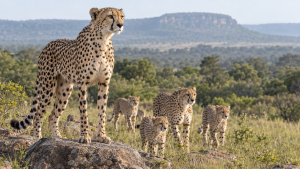
Kuno National Park in Madhya Pradesh is targeting a wild cheetah population of approximately 80 animals by the end of 2027. This goal represents a strategic shift from managing individual cheetahs to sustaining a viable breeding population within the park.
The initiative follows the reintroduction of cheetahs to India, which began in September 2022 under Project Cheetah. As of late November 2026, Kuno has become home to 53 cheetahs, with additional populations at Gandhi Sagar Sanctuary and Veerangana Durgavati Tiger Reserve, bringing the total in India to nearly 60 individuals.
Recent Breeding Successes Mark Milestone for Conservation
On 20 November 2026, a female cheetah named KOMG 3, aged two and a half years and originally from Botswana, gave birth to four cubs in the wild at Kuno National Park. This event marked the first birth in India by a Botswana-origin cheetah and is a significant milestone for the reintroduction program.
Kuno currently has 12 female cheetahs aged two years or older who are eligible to breed. In 2026 alone, five females gave birth, and projections estimate that about 10 females could reproduce between November 2026 and the end of 2027. This could add around 30 new cubs to the population, accelerating the growth toward the 80-cheetah target.
Population Dynamics and Survival Rates Shape Future Plans
Population figures from 25 November 2026 report 59 cheetahs in India, with 40 born in the country. These include 53 at Kuno, four at Gandhi Sagar Sanctuary, and two at Veerangana Durgavati Tiger Reserve. A slightly different tally, accounting for the four cubs born on 20 November, lists 62 cheetahs, including 43 born in India. The discrepancy highlights ongoing monitoring challenges as the population grows.
Since the reintroduction began, Kuno has recorded 58 cubs in 14 litters, with 40 surviving to date. This represents a survival rate of approximately 69%, a positive indicator for the species’ establishment in the wild. The park received nine cheetahs from Botswana in February 2026, consisting of six females and three males, to strengthen genetic diversity and breeding potential.
Understanding Cheetah Reproduction Enhances Conservation Efforts
Female cheetahs are induced ovulators, with an oestrous cycle averaging 12 days but varying from three days to a month. Gestation lasts nearly three months, and litters typically consist of three to four cubs, which are concealed in dense vegetation for their first two months. Mothers move their cubs every five to six days to avoid predators and increase survival chances.
These biological details are critical for managing the breeding population effectively and ensuring the long-term viability of cheetahs in Kuno National Park. The park’s efforts contribute significantly to restoring a species once declared extinct in India, offering hope for a sustainable wild cheetah population in the country.