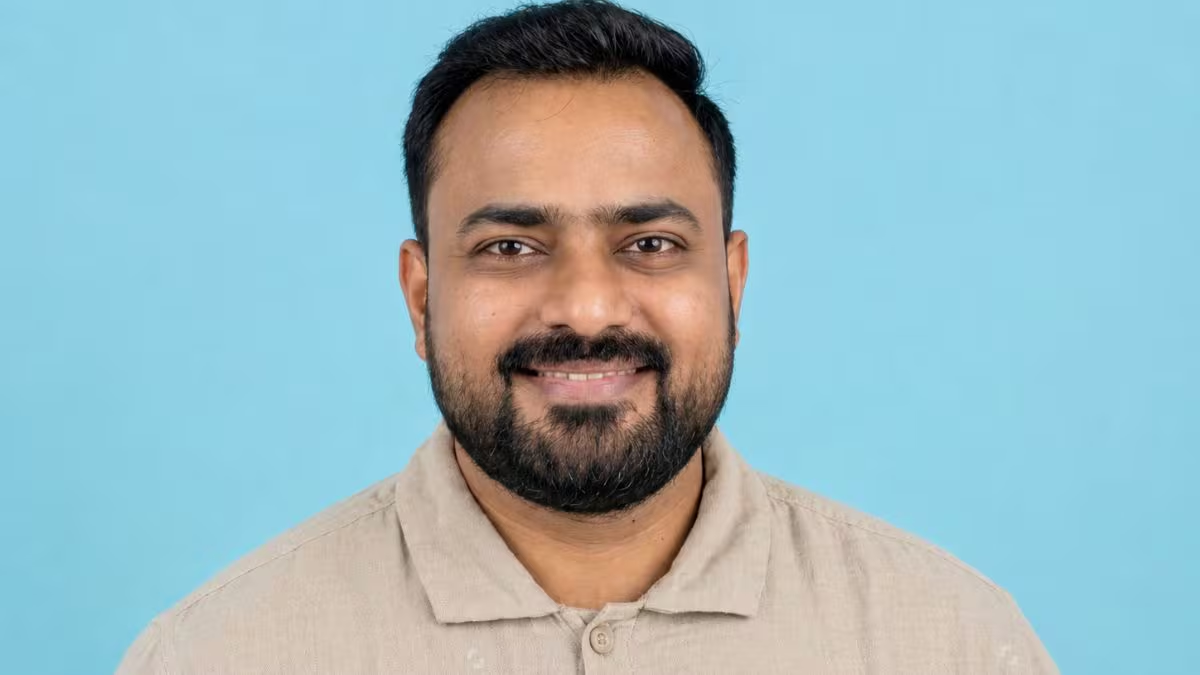
Devadas Menon, a communication and media scholar at the Indian Space Research Organisation (ISRO), is the only Indian researcher recognized in his field on the Stanford-Elsevier World's Top 2% Scientists list for 2026. His work investigates why Indians adopt and continue using digital platforms like Facebook, Instagram Reels, OTT streaming services, and ChatGPT, focusing on the psychological and social effects of media consumption.
- Menon studies the psychology behind India’s digital media use, including social media and OTT platforms.
- He is the sole Indian scholar in communication and media on the 2026 Top 2% Scientists list.
- His 2023 ChatGPT research paper is widely cited globally.
- Menon works at ISRO’s Development and Educational Communication Unit (DECU) in Ahmedabad.
- He highlights the need for more Indian scholars trained in advanced research methods in social sciences.
Who is Devadas Menon and what does he research?
Devadas Menon is an assistant producer at ISRO’s Development and Educational Communication Unit (DECU) in Ahmedabad. He researches cyberpsychology, studying why Indians use digital platforms and how these platforms affect their psychological and social realities. His studies cover a range of media, from television during the COVID-19 pandemic to social media platforms like Facebook and Instagram Reels, and more recently, conversational AI like ChatGPT.
What are some key findings from Menon’s research?
Menon’s research reveals that short-form social media content, such as Instagram Reels, satisfies immediate psychological needs through algorithmic loops. He also found a cultural shift in India from traditional television to personalized OTT streaming services. His ChatGPT study used the Unified Theory of Acceptance and Use of Technology (UTAUT) model and showed that performance expectancy and social influence are critical factors in adopting conversational AI.
Why is Menon’s work important for India?
Most communication and cyberpsychology models are based on Western users. Menon localizes these models to the Indian socio-cultural context, providing empirical data on how Indian users interact with digital media. His work supports the design of educational and scientific programming that leverages India’s space technology for social development and digital literacy.
What challenges does Menon highlight for social science research in India?
Menon points out that social science research receives less funding compared to STEM fields in India. Publishing in top international journals is costly due to article processing charges priced in foreign currencies. He praises the One Nation, One Subscription (ONOS) initiative, which provides free access to over 13,000 journals, as a major benefit for Indian researchers.
What are Menon’s future research plans?
Menon plans to explore the psychological impacts of evolving AI technologies, including algorithmic well-being, deepfakes, and generative AI’s effects on information ecosystems, especially in the Global South.
What advice does Menon give to aspiring researchers?
He encourages young scholars to move beyond descriptive writing and adopt empirical, data-driven methods. Mastering advanced quantitative methodologies and cyberpsychology frameworks is essential. He also advises building resilience against journal rejections and using feedback to improve research quality.
Frequently Asked Questions
Q: What is the Stanford-Elsevier World's Top 2% Scientists list?
A: It is a global ranking that recognizes the top 2% of scientists worldwide based on their research impact and citations.
Q: What is the focus of Menon’s ChatGPT research?
A: His research examines factors influencing the adoption of conversational AI like ChatGPT, highlighting performance expectancy and social influence.
Q: How does Menon’s work benefit India’s space programs?
A: His research helps optimize educational and scientific communication programs delivered via satellite technology, ensuring they effectively reach and empower communities.
Q: Why is Menon the only Indian in his subfield on the list?
A: Menon notes a need for more training and support for Indian social science researchers to publish in top-tier global journals and advance in this field.