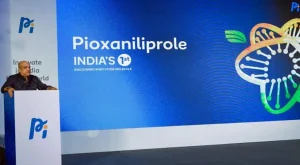
PI Industries has unveiled Pioxaniliprole, marking a milestone as India’s first insecticide molecule discovered domestically. The Central Insecticides Board and Registration Committee officially recognized Pioxaniliprole at their 476th meeting, endorsing it as a breakthrough in the country’s agricultural science.
Launched under the brand name Pioxazon, this insecticide is set to support farmers battling pests across several major crops, with commercial availability beginning in late October 2026 and a nationwide rollout timed for the Rabi season starting November 6.
What Makes Pioxaniliprole Unique in Indian Agriculture
Before Pioxaniliprole, India relied heavily on insecticides developed abroad. This new molecule represents a significant step toward self-reliance in crop protection technology. Developed after more than ten years of dedicated research by PI Industries, it is the first active insecticide ingredient to be discovered and registered within the country.
The approval of Pioxaniliprole reflects India’s growing capabilities in agrochemical innovation, signaling a shift toward homegrown solutions tailored to local pest challenges and crop conditions.
Key Features and Crop Applications
- Formulation: Registered as a 20% weight-by-volume Suspension Concentrate.
- Target Crops: Rice, chilli, tomato, Bengal gram (chana), and maize.
- Pests Controlled: Includes yellow stem borer and leaf folder in rice; fall armyworm, fruit borer, and tobacco caterpillar in chilli; fruit borer in tomato; and pod borer in Bengal gram.
- Launch Timeline: Commercial sales began on October 31, 2026, with a full-scale rollout from November 6 during the Rabi planting season.
How Pioxaniliprole Works and Its Development Journey
Pioxaniliprole belongs to the anthranilic diamide class of insecticides. It targets ryanodine receptors in insect muscle cells, disrupting calcium regulation. This interference causes paralysis, halts feeding, and ultimately leads to the insect’s death. This mode of action is effective against a range of lepidopteran pests, particularly caterpillars that damage crops.
PI Industries invested around ₹2,000 crore in research and development since 2014 to bring this molecule to market. The company is also preparing to gather data to support regulatory approvals in international markets such as the United States, Mexico, and Brazil, aiming to expand its global footprint.
Why Pioxaniliprole Matters for Indian Farmers and Agriculture
The introduction of Pioxaniliprole offers farmers a new, effective tool against persistent pests that threaten crop yields. Its indigenous development means the product is designed with local agricultural conditions in mind, potentially improving pest control outcomes and reducing dependence on imported chemicals.
By advancing domestic innovation in crop protection, India strengthens its agricultural resilience and supports sustainable farming practices. This breakthrough could encourage further investment in agrochemical research within the country, fostering a more self-sufficient agricultural sector.
Frequently Asked Questions
Q: What crops can Pioxaniliprole be used on?
A: It is registered for use on rice, chilli, tomato, Bengal gram (chana), and maize.
Q: What pests does Pioxaniliprole target?
A: It controls pests such as yellow stem borer and leaf folder in rice; fall armyworm, fruit borer, and tobacco caterpillar in chilli; fruit borer in tomato; and pod borer in Bengal gram.
Q: How does Pioxaniliprole work against insects?
A: It disrupts calcium regulation in insect muscle cells by acting on ryanodine receptors, causing paralysis and death of the pest.