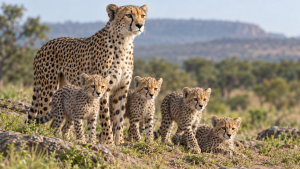
On November 20, 2026, a female cheetah named KOMG 3, aged two and a half years and originally brought from Botswana, gave birth to four healthy cubs in the wild at Kuno National Park in Madhya Pradesh. This event increased India’s cheetah population to 62, with 43 of these animals born within the country since the reintroduction project began.
Reintroducing Cheetahs to India’s Wilds
India’s cheetah population had been extinct in the wild for decades until Project Cheetah was launched in 2022. The initiative aims to reintroduce the species by relocating cheetahs from Southern Africa to suitable habitats in India. Kuno National Park was chosen for its favorable environment and protected status, providing a safe space for these big cats to thrive. The Supreme Court of India authorized this trial in 2020, allowing the introduction of Southern African cheetahs under strict conservation guidelines.
KOMG 3’s birth marks a significant milestone as she is the first female from Botswana to successfully raise cubs in India’s wild. Before this, only one other birth had been recorded in the wild since the project’s inception. The cheetahs undergo a staged soft release process, where they acclimate in fenced enclosures before being fully released into the open landscape, helping them adjust to their new environment gradually.
Key Facts About India’s Cheetah Conservation Efforts
- Trial authorization: The Supreme Court approved the introduction of Southern African cheetahs into India as a trial in 2020.
- Natural cub-rearing: Female cheetahs hide their cubs in dense vegetation for the first two months, moving them every five to six days to avoid predators.
- Soft release method: Cheetahs are first kept in fenced areas to adapt before entering the wild freely.
- International protection: Cheetahs are listed in Appendix I of CITES, which restricts international commercial trade of wild specimens except under specific conditions.
Why This Birth Is a Conservation Breakthrough
The birth of four cubs in the wild is a hopeful sign for the success of Project Cheetah. It demonstrates that relocated cheetahs can not only survive but also reproduce naturally in Indian habitats. This progress is a testament to the efforts of conservationists, veterinarians, and forest staff who have worked tirelessly to monitor and support the animals.
Expanding the cheetah population in India could help restore ecological balance by reintroducing a top predator that had vanished from the region. It also highlights the potential for international wildlife cooperation, as animals from Botswana are helping revive a species once native to India. Continued monitoring and protection will be crucial to ensure the cubs grow safely and contribute to a stable, growing population.
Frequently Asked Questions
Q: Why were cheetahs brought from Botswana to India?
A: India’s native cheetah population had gone extinct, so Southern African cheetahs from Botswana were introduced as part of a conservation trial authorized by India’s Supreme Court to reestablish the species in suitable habitats.
Q: How do cheetah mothers care for their cubs in the wild?
A: Female cheetahs hide their cubs in dense vegetation for the first two months and move them to new hiding spots every five to six days to protect them from predators.
Q: What is the staged soft release process used in Project Cheetah?
A: Cheetahs are initially kept in fenced enclosures to help them adjust to the new environment before being released fully into the open wild, improving their chances of survival.