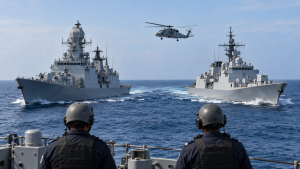
On November 15, 2026, the Indian Navy’s stealth frigate INS Sahyadri and the Royal Canadian Navy’s Halifax-class frigate HMCS Regina engaged in a bilateral naval exercise at sea. This operation aimed to enhance operational cooperation and interoperability between the two navies, reflecting growing defence ties between India and Canada.
Details of the Joint Naval Exercise
The exercise featured several coordinated maritime activities designed to improve teamwork and readiness. These included cross-deck helicopter landings, where helicopters from one ship land on the deck of the other, and vertical replenishment operations, which involve transferring supplies between ships using helicopters while underway. Additionally, the ships conducted a Passage Exercise (PASSEX), a short-duration drill focusing on coordinated manoeuvres, communication drills, and joint flight operations. The Indian Navy described the engagement as an effort to "Strengthen Bonds at Sea," highlighting the importance of such collaborations in fostering mutual trust and operational synergy.
Context of India-Canada Defence Relations
This naval exercise followed the inaugural India–Canada Defence Dialogue held earlier in November 2026. The dialogue explored ways to expand cooperation in defence and security, signaling a commitment from both countries to deepen their strategic partnership. Maritime cooperation is a key component of this relationship, given the importance of secure sea lanes and regional stability. The joint exercise serves as a practical step towards enhancing interoperability and understanding between the two navies, which could prove vital in future multilateral operations or humanitarian missions.
Key Facts About the Ships and Operations
- INS Sahyadri: Part of the Shivalik-class, INS Sahyadri is India’s first domestically designed and built stealth frigate under Project 17, emphasizing advanced stealth and combat capabilities.
- HMCS Regina: A Halifax-class frigate, HMCS Regina was developed through Canada’s Canadian Patrol Frigate programme, designed for anti-submarine warfare and general-purpose naval operations.
- Vertical Replenishment: This method allows ships to resupply while underway by transferring stores via helicopter using suspended loads, enabling continuous operations without the need to dock.
- Passage Exercise (PASSEX): A PASSEX is a brief naval exercise conducted when ships from different navies meet, focusing on communication, manoeuvring, and basic interoperability to ensure smooth coordination.
Why This Exercise Matters for India and Canada
The joint naval exercise represents more than just a routine military drill; it reflects a strategic effort to build stronger defence ties between India and Canada. As both countries seek to play more active roles in regional and global security, such engagements help build trust and familiarity between their armed forces. Improved interoperability means that in times of crisis or joint operations, the navies can work together more effectively. This cooperation also signals to other nations the growing partnership between India and Canada, potentially influencing regional security dynamics.
Moreover, the exercise showcases India’s growing naval capabilities, particularly through its indigenous stealth frigates, while allowing Canada to demonstrate its operational reach and commitment to international partnerships. For both navies, these exercises provide valuable experience in joint operations, which are increasingly important in today’s interconnected security environment.
Frequently Asked Questions
Q: What is the significance of the INS Sahyadri in the Indian Navy?
A: INS Sahyadri is a Shivalik-class stealth frigate, notable for being part of India’s first domestically designed and built class of stealth warships, enhancing the navy’s combat and stealth capabilities.
Q: What does a Passage Exercise (PASSEX) involve?
A: A PASSEX is a short naval exercise conducted when ships from different navies meet, focusing on communication, manoeuvring, and joint operations to improve interoperability.
Q: How does vertical replenishment benefit naval operations?
A: Vertical replenishment allows ships to transfer supplies via helicopter while underway, enabling continuous operations without needing to dock or slow down, which is crucial for maintaining readiness at sea.