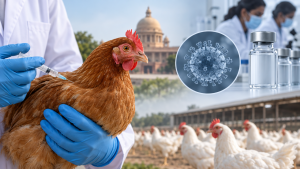
India is set to introduce its first indigenous inactivated vaccine targeting the H5N1 strain of avian influenza in chickens. The official dedication ceremony will take place on November 20, 2026, at the ICAR-National Institute of High Security Animal Diseases (ICAR-NIHSAD) in Bhopal. Union Agriculture and Farmers Welfare Minister Shivraj Singh Chouhan will preside over the event and unveil the vaccine to the nation.
Understanding the H5N1 Avian Influenza Threat
Highly Pathogenic Avian Influenza (HPAI), particularly the H5N1 subtype, poses a severe threat to poultry worldwide. The H5N1 virus is named for its specific combination of haemagglutinin (H5) and neuraminidase (N1) proteins on its surface, which are key to how the virus infects cells and spreads. Since its emergence, H5N1 has caused widespread outbreaks in birds and has occasionally infected humans, leading to serious illness and fatalities.
The virus’s genome is segmented, allowing it to exchange genetic material with other influenza strains when co-infecting a host. This reassortment can create new variants with altered properties, complicating efforts to control the disease. Scientists classify H5N1 viruses into clades based on genetic analysis of the haemagglutinin gene, which helps track their evolution and spread.
Key Details About the New Vaccine
- The vaccine was developed by ICAR-NIHSAD specifically to combat the H5N1 Clade 2.3.2.1a, the strain responsible for most recent bird flu outbreaks in India.
- It is an inactivated vaccine, meaning it uses a killed form of the virus to stimulate immunity without causing disease.
- One dose of the vaccine is expected to provide immunity for up to six months, primarily targeting laying hens and breeder flocks.
- Before this vaccine, no commercial product in India specifically addressed this clade of H5N1.
- The vaccine’s launch follows outbreaks reported in states like Tamil Nadu and Andhra Pradesh, which have impacted poultry farmers significantly.
Why This Vaccine Matters for Poultry and Public Health
HPAI outbreaks can devastate poultry populations, often killing nearly all infected birds. The economic impact is severe; for example, a major outbreak in 2006 resulted in losses estimated between Rs 2,200 and 3,000 crore. Protecting poultry flocks helps stabilize farmers’ livelihoods and the poultry industry, which is a vital source of food and income in India.
Beyond animal health, H5N1 poses risks to humans. Since 2003, there have been 1,003 confirmed human cases of H5N1 infection worldwide, with 479 deaths reported across 25 countries. While human-to-human transmission remains rare, controlling the virus in birds reduces the chance of it adapting to spread more easily among people.
The vaccine also supports surveillance strategies such as DIVA (Differentiating Infected from Vaccinated Animals), which helps authorities monitor disease spread and vaccination effectiveness by distinguishing vaccinated birds from those naturally infected.
Frequently Asked Questions
Q: What is the significance of the H5N1 Clade 2.3.2.1a?
A: This clade represents a specific evolutionary lineage of the H5N1 virus responsible for most recent bird flu outbreaks in India, making it a critical target for vaccination efforts.
Q: How does an inactivated vaccine work?
A: An inactivated vaccine uses virus particles that have been killed so they cannot cause disease but still trigger the immune system to develop protection.
Q: Why is controlling H5N1 important for human health?
A: Although primarily a bird disease, H5N1 can infect humans and cause severe illness. Controlling the virus in poultry reduces the risk of human infections and potential pandemics.