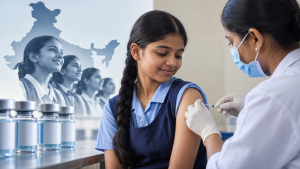
India has successfully administered more than 10 million doses of the Human papillomavirus (HPV) vaccine in under nine months since the launch of its National HPV Vaccination Campaign by Prime Minister Narendra Modi in February 2026. This large-scale immunization effort targets 14-year-old girls across the country to help prevent cervical cancer.
Understanding the HPV Vaccination Campaign
The campaign offers a free, voluntary single dose of the HPV vaccine to girls aged 14, provided they have parental consent. Vaccinations are carried out at designated government health facilities nationwide. The goal is to reach an annual target group of approximately 12 million girls, based on population estimates from the Registrar General of India in 2021. The vaccine is designed to protect against the most common high-risk HPV types that cause cervical cancer.
HPV vaccines use virus-like particles made from recombinant coat proteins, specifically the L1 capsid protein, to trigger immunity without containing the virus’s genetic material. However, vaccination does not eliminate the need for regular cervical cancer screening later in life, as the vaccine covers only certain HPV strains.
Progress and Coverage Across States
By November 21, 2026, the campaign had achieved nearly 87% coverage of the target population nationwide. Some states have reached full coverage, including Gujarat, Uttar Pradesh, Andhra Pradesh, Mizoram, Madhya Pradesh, and Bihar. Uttar Pradesh leads with over 2.9 million girls vaccinated, followed by Bihar with 1.37 million and Gujarat with 775,000.
The program’s implementation is supported by the U-WIN digital platform, which enables real-time monitoring, beneficiary tracking, appointment booking, and issuance of digital vaccination certificates. This technology helps ensure efficient management and transparency of the campaign.
Safety, Legal Review, and Vaccine Details
In July 2026, the Delhi High Court reviewed and rejected a petition seeking to halt the vaccination program, affirming its continuation. At that time, approximately 5.59 million doses had been administered, with 120 reported adverse events but no deaths linked to the vaccine.
The vaccine used in India, known as CERVAVAC, is a quadrivalent vaccine developed by the Serum Institute of India with support from the Department of Biotechnology and the Biotechnology Industry Research Assistance Council. It targets HPV types 6, 11, 16, and 18, which are responsible for the majority of cervical cancer cases and genital warts worldwide.
Frequently Asked Questions
Q: Who is eligible for the HPV vaccine under this campaign?
A: The campaign targets 14-year-old girls across India, offering a single dose of the HPV vaccine with parental consent at government health facilities.
Q: Does receiving the HPV vaccine mean cervical cancer screening is unnecessary?
A: No. The vaccine protects against certain HPV types but does not cover all high-risk strains, so regular cervical cancer screening remains important.
Q: Have there been any serious side effects reported from the vaccine?
A: As of July 2026, there were 120 reported adverse events among nearly 5.6 million doses administered, with no deaths attributed to the vaccine.