Scientists at the Indian Institute of Science (IISc) in Bengaluru have discovered a promising new approach to combat drug-resistant tuberculosis (TB). On November 16, 2026, they reported that pairing the antibiotic isoniazid with vancomycin can restore the effectiveness of isoniazid against resistant strains of Mycobacterium tuberculosis, the bacterium that causes TB. This breakthrough was published in the journal Microbiology Spectrum.
Understanding Drug-Resistant Tuberculosis
Tuberculosis is a serious infectious disease primarily affecting the lungs. It is caused by Mycobacterium tuberculosis, a bacterium with a unique waxy coating that makes it difficult to treat and identify using standard laboratory stains. Drug-resistant TB, including multidrug-resistant (MDR) strains, arises when the bacteria evolve to survive despite antibiotic treatment. This resistance often results from mutations that block the activation of drugs like isoniazid, rendering them ineffective.
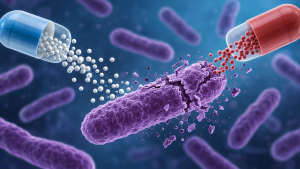
Isoniazid is a prodrug, meaning it requires activation by a bacterial enzyme called KatG. Once activated, it inhibits a key enzyme involved in fatty acid synthesis, disrupting the bacterium’s cell wall. However, mutations in KatG can prevent this activation, allowing the bacteria to survive. Vancomycin, on the other hand, targets the bacterial cell wall by binding to peptidoglycan precursors, but it is usually ineffective against TB due to the bacterium’s protective outer layer.
Key Findings from Laboratory and Animal Studies
- The IISc team collaborated with the National Tuberculosis Institute in Bengaluru to test the antibiotic combination on clinical isolates from patients with drug-resistant TB.
- Most bacterial samples, including MDR strains, showed more than a 90% reduction in growth when treated with both isoniazid and vancomycin together.
- The combination works by damaging the bacterium’s cell wall, allowing vancomycin to penetrate and kill the bacteria effectively.
- In mouse models infected with MDR TB, the combined treatment reduced bacterial loads in the lungs and spleen by about tenfold after 10 days, whereas individual drugs had little effect.
- Examination of lung tissue from treated mice revealed fewer granulomas, which are clusters of immune cells formed in response to infection.
Implications for Future TB Treatments
This discovery offers a hopeful new strategy against drug-resistant TB, a major global health challenge. By restoring the power of isoniazid through combination with vancomycin, this approach could improve treatment outcomes and reduce the spread of resistant strains. The research team, led by Professor Nagasuma Chandra and PhD student Sukriti Pal, is now working to advance this combination therapy toward human clinical trials. If successful, it could become a valuable tool in the fight against TB, especially in regions where drug resistance is widespread.
Frequently Asked Questions
Q: Why is drug-resistant tuberculosis difficult to treat?
A: Drug-resistant TB bacteria have mutations that prevent antibiotics like isoniazid from working effectively, making standard treatments less successful.
Q: How does the combination of isoniazid and vancomycin work against resistant TB?
A: The combination damages the bacterial cell wall, allowing vancomycin to enter and kill the bacteria, overcoming resistance mechanisms that block isoniazid activation.
Q: What are the next steps for this research?
A: The researchers plan to conduct human clinical trials to test the safety and effectiveness of this antibiotic combination in treating drug-resistant TB patients.