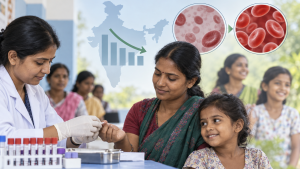
The Indian Council of Medical Research (ICMR) released important findings from its Survey for Assessment of Markers of Population Health, Activity, Diet and Anthropometry (SAMPADA) conducted between 2023 and 2025. Announced on November 23, 2026, the survey reveals a notably lower prevalence of anaemia across various age groups in India compared to earlier national surveys.
Understanding the SAMPADA Survey and Its Scope
The SAMPADA survey is a large-scale health assessment covering over 200,000 individuals from more than 81,000 households. These households span 183 districts across 35 States and Union Territories, making it one of the most comprehensive health surveys in the country. Unlike previous surveys such as the National Family Health Survey (NFHS), which used finger-prick blood tests, SAMPADA employed venous blood sampling combined with automated analysers to measure haemoglobin levels. This method is considered more precise and reliable for detecting anaemia.
Key Findings on Anaemia Prevalence
- Among children aged 12 to 59 months, anaemia prevalence was 41.8%, a significant decrease from the 64% reported in NFHS-5.
- Women of reproductive age showed a 56% anaemia rate, while adolescent girls aged 10 to 19 years had a 46% prevalence.
- Adolescent boys and men aged 20 to 59 years had lower rates, between 22% and 23%.
- The majority of anaemia cases were mild, with severe anaemia accounting for less than 2% across most groups.
- Iron deficiency was identified as the cause for about half of the anaemia cases among women, adolescent girls, and children.
Why These Results Matter for Public Health
The lower anaemia rates reported by SAMPADA suggest progress in addressing this widespread health issue in India. Anaemia, often caused by iron deficiency, affects physical and cognitive development, especially in children and women of reproductive age. The improved accuracy of venous blood sampling provides a clearer picture of the current health landscape, which can help policymakers and health professionals design better-targeted interventions. While the reduction is encouraging, the persistence of anaemia in significant portions of the population indicates ongoing challenges in nutrition and healthcare access.
Frequently Asked Questions
Q: What is anaemia and why is it important to monitor?
A: Anaemia is a condition characterized by low haemoglobin levels, reducing the blood's capacity to carry oxygen. Monitoring anaemia is crucial because it affects growth, development, and overall health, particularly in vulnerable groups like children and pregnant women.
Q: How does venous blood sampling improve anaemia detection?
A: Venous blood sampling collects blood from veins, usually in the upper arm, allowing for more accurate haemoglobin measurement using automated analysers compared to finger-prick tests, which can be less reliable.
Q: What factors contribute to anaemia in India?
A: Iron deficiency is a major cause, but anaemia can also result from other nutritional deficiencies, infections, and chronic diseases. Socioeconomic factors and access to healthcare also play significant roles.