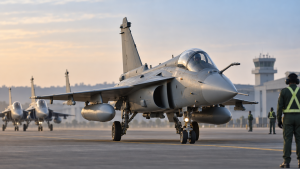
On November 16, 2026, Air Chief Marshal Ashutosh Dixit announced that the Indian Air Force (IAF) plans to induct a squadron of the indigenous Light Combat Aircraft (LCA) Mark 1A during the 2026–27 financial year. Hindustan Aeronautics Limited (HAL), the state-owned aerospace manufacturer, aims to deliver around 10 aircraft by March 2027, with the first handover expected as early as January, just before the Aero India 2027 airshow.
Development and Procurement of the LCA Mark 1A
The LCA Mark 1A is an upgraded version of the Tejas fighter jet, developed domestically to modernize the IAF’s fleet. The initial contract signed in February 2021 with HAL covered 83 aircraft at a cost of Rs 36,400 crore. This was followed by a second order in September 2025 for 97 additional jets worth over Rs 62,370 crore, bringing the total number on order to 180 aircraft. Deliveries from the second batch are expected to begin in the 2027–28 fiscal year.
Delays in the program have occurred due to supply issues with the F404-IN20 turbofan engines from GE Aerospace and challenges integrating the Israeli EL/M-2052 Active Electronically Scanned Array (AESA) radar system. To keep the induction on schedule, the IAF has agreed to accept the first few aircraft with some radar functions temporarily limited, which will be upgraded later. Future aircraft are planned to incorporate the DRDO-developed Uttam AESA radar, enhancing indigenous capabilities.
Current Fighter Squadron Status and Role of LCA Mark 1A
The IAF currently operates 29 active fighter squadrons, falling short of its sanctioned strength of 42. Many of the existing squadrons rely on aging MiG-21 fighters, which the LCA Mark 1A is set to replace. The new jets will bolster the IAF’s combat readiness and help modernize its fleet with advanced avionics, better radar, and improved flight control systems.
The LCA Mark 1A features a quadruplex digital fly-by-wire flight-control system developed in India, enhancing maneuverability and safety. Its EL/M-2052 radar can track up to 64 targets simultaneously and offers synthetic-aperture radar capabilities for high-resolution ground mapping and moving target detection. These features make the Mark 1A a significant upgrade over older aircraft.
Significance of the LCA Mark 1A Induction for India’s Defense
The induction of the LCA Mark 1A squadron marks a major step in India’s push for self-reliance in defense technology. By producing advanced fighter jets domestically, India reduces dependence on foreign suppliers and strengthens its aerospace industry. The program also supports the government’s Make in India initiative, creating jobs and fostering technological innovation.
Operationalizing the LCA Mark 1A will enhance the IAF’s ability to respond to regional security challenges with a modern, agile fleet. The aircraft’s advanced radar and avionics systems improve situational awareness and combat effectiveness, crucial for maintaining air superiority. This induction also signals progress in overcoming earlier technical hurdles, setting the stage for future indigenous upgrades.
Frequently Asked Questions
Q: What is the LCA Mark 1A?
A: The LCA Mark 1A is an upgraded version of India’s Light Combat Aircraft, the Tejas, featuring advanced avionics, radar, and flight control systems designed to modernize the Indian Air Force’s fighter fleet.
Q: When will the IAF receive the first LCA Mark 1A jets?
A: The first deliveries are expected in January 2027, with about 10 aircraft planned for delivery by March 2027 as part of the initial induction squadron.
Q: Why has the LCA Mark 1A program faced delays?
A: Delays have been caused by supply issues with the F404-IN20 engines from GE Aerospace and challenges integrating the Israeli EL/M-2052 AESA radar, though temporary concessions have allowed the program to proceed.