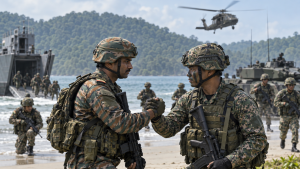
India and Malaysia launched the sixth edition of their joint military exercise, HARIMAU SHAKTI–VI, on November 19, 2026, in Ipoh, Malaysia. This 12-day exercise involves 120 personnel from each country and is set to conclude on November 30. The drill is designed to enhance cooperation and readiness in counter-terrorism and sub-conventional warfare operations.
Purpose and Scope of HARIMAU SHAKTI–VI
HARIMAU SHAKTI, which translates to "Tiger Power," is a recurring bilateral military exercise held alternately in India and Malaysia. The primary goal is to train forces in sub-conventional operations aligned with Chapter VII of the United Nations mandate, which authorizes actions to maintain or restore international peace and security. This year’s exercise emphasizes coordinated counter-terrorism tactics, jungle warfare, and operations in semi-urban environments.
The training includes practical drills such as raids, cordon-and-search missions, and combat engineering tasks. Combat engineers play a critical role by ensuring mobility for friendly forces, impeding enemy movement, and enhancing survivability on the battlefield. The exercise also integrates advanced technology, including the use of unmanned aerial systems (UAS) for reconnaissance and surveillance.
Key Features and Activities of the Exercise
- Joint Command Post and Surveillance Centre setup to coordinate operations.
- Deployment of unmanned aerial systems for intelligence gathering and battlefield awareness.
- Counter-UAS capabilities to detect and neutralize hostile drones, combining radar, radio-frequency, and electro-optical sensors to overcome challenges in distinguishing drones from birds or clutter.
- Simulated counter-terrorism scenarios culminating in a joint validation exercise to test interoperability and response effectiveness.
Significance of the Exercise for Regional Security
HARIMAU SHAKTI–VI strengthens military ties between India and Malaysia, fostering greater interoperability and mutual understanding. By focusing on counter-terrorism and sub-conventional warfare, the exercise addresses evolving security threats in the region, including insurgency and asymmetric warfare. The collaboration under Chapter VII of the UN Charter highlights the commitment of both nations to uphold international peace and security through joint preparedness.
The integration of advanced technologies like unmanned aerial systems and counter-UAS measures reflects the modernization of military tactics to address contemporary challenges. This exercise also serves as a platform for sharing best practices and enhancing the capabilities of both forces in complex operational environments.
Frequently Asked Questions
Q: What is the main objective of HARIMAU SHAKTI–VI?
A: The exercise aims to improve joint counter-terrorism operations and sub-conventional warfare skills between Indian and Malaysian forces, enhancing coordination and readiness.
Q: What does Chapter VII of the United Nations mandate involve?
A: Chapter VII allows the UN Security Council to take measures, including military action, to maintain or restore international peace and security.
Q: How do counter-UAS systems work during the exercise?
A: They use a combination of radar, radio-frequency, and electro-optical sensors to detect and neutralize hostile drones, overcoming difficulties in distinguishing small drones from birds or environmental clutter.