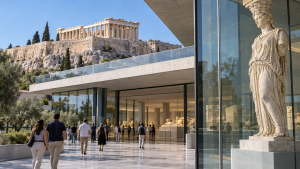
The Old Acropolis Museum in Athens, Greece, welcomed visitors again on November 23, 2026, following a nearly two-decade closure for restoration. The reopening ceremony was attended by Prime Minister Kyriakos Mitsotakis, marking a significant moment for Greece’s cultural heritage. The museum, which first opened in 1874, is the country’s oldest modern museum and has undergone extensive renovations to preserve and enhance its collection.
History and Restoration of the Museum
The Old Acropolis Museum was originally constructed between 1865 and 1874, designed by architect Panagis Kalkos. It occupies a unique position on the eastern edge of the Acropolis rock, with much of the building situated below the hilltop, making it discreetly integrated into the landscape. In the 1950s, the museum was expanded in a modern style under the guidance of Patroklos Karantinos.
After closing for restoration 19 years ago, the museum underwent a seven-year renovation funded through a combination of public and private donations. Culture Minister Lina Mendoni estimated the cost at around €6.2 million, although some reports suggest the total reached closer to €10 million. The restoration aimed not only to preserve the building itself but also to upgrade the displays and introduce new technology to enhance visitor experience.
What Visitors Can Expect Inside the Museum
- The museum now features previously unseen ancient artifacts from the Acropolis, including items from the Parthenon, Propylaea, Erechtheum, and the Temple of Athena Nike.
- Digital presentations trace the 2,500-year history of the Acropolis, offering an immersive educational experience.
- A new viewing gallery allows visitors to observe Culture Ministry technicians as they carry out ongoing restoration work on artifacts.
- The museum’s cultural program blends exhibitions on Athens’ rich archaeological past with contemporary art, highlighted by a new exhibition from artist Michael Rakowitz.
Why the Museum’s Reopening Matters Today
The reopening of the Old Acropolis Museum is seen as a fresh chapter in preserving and promoting Greece’s ancient heritage. Culture Minister Mendoni emphasized that the museum will support both archaeological research and contemporary cultural dialogue, bridging the past and present. The event also provided a platform for Prime Minister Mitsotakis to reiterate Greece’s longstanding request for the return of the Parthenon Sculptures currently held by the British Museum.
The Acropolis itself remains one of the world’s most visited archaeological sites, with over 4.6 million admissions recorded in 2025. The revitalized museum adds depth to the visitor experience by offering new insights and access to artifacts that have been hidden from public view for decades.
Frequently Asked Questions
Q: Why was the Old Acropolis Museum closed for so long?
A: The museum was closed for 19 years to undergo extensive restoration and modernization to preserve the building and improve the display of its collections.
Q: What new features does the museum offer after reopening?
A: Visitors can now see previously unseen artifacts, enjoy digital presentations on the Acropolis’ history, and observe restoration work in a dedicated viewing gallery.
Q: What is the significance of the Parthenon Sculptures mentioned at the reopening?
A: The Parthenon Sculptures are ancient Greek marble sculptures currently held by the British Museum. Greece has long sought their return, and the reopening event was used to highlight this ongoing cultural dispute.