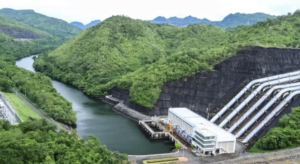
Madhya Pradesh Chief Minister Mohan Yadav officially inaugurated a unit of the Gandhi Sagar Pumped Hydro Storage Project on November 18, 2026, at Rampur in Neemuch district. This event marks a significant milestone for the ambitious energy project developed by the Greenko Group, which is set to become the largest standalone pumped-storage facility in India and Asia. While reports vary on whether the unit has begun commercial operation, the inauguration signals rapid progress toward the project's completion.
Understanding Pumped Hydro Storage and the Gandhi Sagar Project
Pumped hydro storage is a form of energy storage that uses two reservoirs at different elevations to store and generate electricity. During low electricity demand, excess power is used to pump water from the lower reservoir to the upper reservoir. When demand rises, water is released back down through turbines to generate electricity. The Gandhi Sagar project employs a closed-loop system, meaning the upper reservoir does not receive natural inflows, relying solely on water cycled between the two reservoirs.
The project is designed with a total capacity of 1,920 megawatts (MW), distributed across nine generating units. It spans approximately 414 hectares and uses the existing Gandhi Sagar reservoir as the lower reservoir, with a newly constructed upper reservoir holding about 2.4 thousand million cubic feet (TMC) of water. This setup allows for up to six hours of continuous power generation at full capacity, with an estimated annual electricity output of 3,580 million units. The system boasts a round-trip efficiency of around 80%, meaning most of the energy used to pump water uphill can be recovered during generation.
Key Facts and Project Timeline
- The project’s investment is approximately ₹11,500 crore, with some reports specifying ₹11,474 crore.
- It connects to a 765/400 kV substation located in Mandsaur district, roughly 60 kilometers from the site.
- The Central Electricity Authority targets December 2026 for commissioning the first units and full commercial operation by June 2027.
- The plant uses reversible turbine-generator units that can both pump water uphill and generate electricity downhill.
- Its closed-loop design distinguishes it from pump-back plants, which receive some natural water inflows to the upper reservoir.
- The facility can provide grid-support services such as stabilizing frequency and voltage through synchronous machine operation.
Why the Gandhi Sagar Project Matters for India’s Energy Future
As India’s electricity demand grows and renewable energy sources like solar and wind become more prevalent, managing supply fluctuations is increasingly important. Pumped hydro storage projects like Gandhi Sagar offer a reliable way to store excess energy and release it when needed, balancing the grid and reducing reliance on fossil fuels. The project’s large capacity and advanced design will help Madhya Pradesh and the broader region integrate more renewable power, improve grid stability, and support energy security.
Moreover, the project’s scale and technology set a benchmark for future pumped-storage developments in India and Asia. Its ability to provide ancillary services such as reactive power support and rotational inertia enhances the overall resilience of the power system. The Gandhi Sagar facility exemplifies how large-scale energy storage can complement renewable energy expansion and contribute to a cleaner, more sustainable electricity grid.
Frequently Asked Questions
Q: What is a pumped hydro storage project?
A: It is a type of energy storage system that moves water between two reservoirs at different heights to store and generate electricity, helping balance supply and demand on the grid.
Q: How does the Gandhi Sagar project’s closed-loop system work?
A: The closed-loop system cycles water between the upper and lower reservoirs without natural inflows to the upper reservoir, relying entirely on pumped water for storage and generation.
Q: When will the Gandhi Sagar pumped storage project be fully operational?
A: The first units are expected to be commissioned by December 2026, with full commercial operations targeted for June 2027.