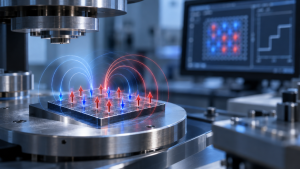
On November 19, 2026, the Ministry of Heavy Industries issued letters of intent (LoIs) to four companies—Coal India Ltd, ReNew Pvt Ltd, Prozeal Green Energy Ltd, and Midwest Energy Ltd—marking the first step in India’s Rare Earth Permanent Magnet (REPM) Scheme. These letters represent preliminary approvals, with the companies required to provide performance guarantees and meet compliance standards before receiving final project awards.
Understanding the Rare Earth Permanent Magnet Scheme
The REPM Scheme was approved by the Union Cabinet on November 26, 2025, with a budget allocation of ₹7,280 crore. Its primary goal is to establish a domestic manufacturing capacity of 6,000 tonnes per year for integrated rare earth permanent magnets, which are critical components in electric vehicles, renewable energy technologies, and various electronics.
The scheme plans to support five beneficiaries, though so far only four firms have been named. The government has not yet clarified whether a fifth participant will be selected. The initiative aims to reduce reliance on imports of rare earth magnets, which are currently dominated by a few countries, thereby strengthening India’s supply chain and technological independence.
Details of the Approved Projects and Bidders
- Coal India Ltd is the second-lowest (L2) bidder in a consortium with the Non-Ferrous Materials Technology Development Centre (NFTDC). Their project involves setting up a special purpose vehicle to produce 1,200 tonnes annually of sintered neodymium-iron-boron (NdFeB) magnets. The project timeline is seven years, including two years for pre-construction and five years of operation.
- Coal India did not seek any per-kilogram production incentive, whereas bids from ReNew Pvt Ltd, Prozeal Green Energy Ltd, and Midwest Energy Ltd ranged between ₹243 and ₹505 per kilogram.
- The IRP Infratech–BaRupOn consortium, which reportedly bid zero, was not included in the list of firms receiving letters of intent.
Why This Scheme Matters for India’s Industrial Future
Rare earth permanent magnets, especially NdFeB types, are essential for high-performance motors and generators used in electric vehicles and renewable energy systems. Producing these magnets domestically can reduce India’s dependence on imports, which currently come from limited global sources, often subject to geopolitical risks and supply disruptions.
The scheme’s focus on integrated magnet-making capacity means companies will handle the entire production process, from raw material processing to finished magnets. This vertical integration is crucial for ensuring quality, cost control, and supply security.
Moreover, the inclusion of advanced manufacturing techniques such as sintering and grain-boundary diffusion, which enhance magnet performance and durability, reflects the scheme’s emphasis on cutting-edge technology. For example, adding elements like dysprosium or terbium improves resistance to demagnetization at high temperatures, although it increases material costs.
By fostering domestic production, the REPM Scheme supports India’s broader goals of boosting manufacturing, promoting clean energy technologies, and securing critical raw materials.
Frequently Asked Questions
Q: What are rare earth permanent magnets used for?
A: They are key components in electric vehicle motors, wind turbines, consumer electronics, and other technologies requiring strong, lightweight magnets.
Q: Why is India focusing on domestic production of these magnets?
A: To reduce dependence on imports, enhance supply chain security, and support the growth of strategic industries like electric vehicles and renewable energy.
Q: What does the letter of intent (LoI) signify in this scheme?
A: An LoI is an initial approval that allows firms to proceed with project preparations, subject to meeting performance guarantees and compliance before final awards are granted.