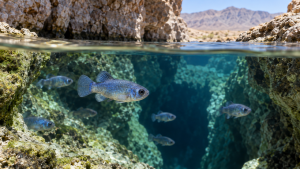
The National Park Service reported a notable increase in the population of the endangered Devils Hole pupfish, counting 137 individuals during a survey conducted on October 10, 2026. This number marks a substantial rise from 77 fish counted in spring 2026 and 69 in fall 2025, signaling positive developments for the species' survival.
Unique Habitat of the Devils Hole Pupfish
The Devils Hole pupfish lives exclusively in Devils Hole, a deep, water-filled cavern located within Death Valley National Park. This isolated environment is critical to the fish’s survival, providing a rare ecosystem that has been closely monitored by scientists since 1972. The cavern’s conditions are highly specialized, with a shallow limestone shelf where the pupfish breed and feed.
Because of the pupfish’s limited habitat, any changes in the cavern’s environment can have significant impacts on their population. The National Park Service and U.S. Fish and Wildlife Service conduct regular surveys by scuba diving and surface observation to track the fish numbers and health.
Conservation Efforts and Recent Population Changes
- Between March 2025 and February 2026, 72 captive-raised pupfish were released into Devils Hole to bolster the wild population.
- Biologists believe that most of the 137 fish counted in October 2026 hatched naturally within the cavern, indicating successful reproduction.
- Two earthquakes in 2025 disrupted the habitat, contributing to earlier population declines.
- Following an earthquake near Panama on October 9, 2026, initial signs of stress were observed in the pupfish, but subsequent visits showed improved health.
- Conservation teams provided supplemental food to support the fish while algae on the limestone shelf recovered, which is vital for their diet.
Why This Population Growth Matters for Conservation
The increase in the Devils Hole pupfish population is a hopeful sign for conservationists working to protect one of the world’s rarest fish species. The pupfish’s survival depends heavily on the delicate balance of its unique habitat, which has faced challenges from natural events like earthquakes. The successful release of captive-raised fish and the natural hatching of new individuals demonstrate that targeted conservation efforts can make a difference.
Maintaining the health of the cavern environment is crucial, as even minor disturbances can threaten the species’ existence. The monitoring and intervention by biologists, including supplemental feeding and habitat restoration, highlight the ongoing commitment needed to preserve this fragile ecosystem.
Frequently Asked Questions
Q: Where is the Devils Hole pupfish found?
A: The Devils Hole pupfish is found only in Devils Hole, a water-filled cavern in Death Valley National Park.
Q: How many Devils Hole pupfish were counted in the latest survey?
A: The most recent survey on October 10, 2026, counted 137 pupfish, up from 77 in spring 2026.
Q: What threats have affected the pupfish population recently?
A: Earthquakes in 2025 and 2026 disrupted the habitat, causing stress and population declines, but conservation efforts have helped the population recover.