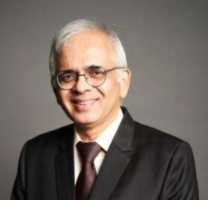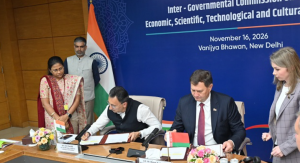
On November 16, 2026, the Council of Scientific and Industrial Research (CSIR) of India and the National Academy of Sciences of Belarus (NASB) formalized their continued scientific collaboration by signing their Second Programme of Cooperation for the years 2027 to 2029. The signing took place in New Delhi, with CSIR Director General Dr N. Kalaiselvi and NASB Deputy Chairman Dr A. V. Trukhanov representing their respective organizations.
Building on Established Scientific Ties
This new agreement follows an initial Memorandum of Understanding on Scientific and Technical Cooperation that was signed on May 22, 2023. The renewed program aims to deepen the partnership by supporting joint research and development projects, enhancing scientific and technological exchanges, and fostering stronger connections between research institutions and scientists from both India and Belarus.
One key feature of this cooperation is the upcoming Second Joint Call for Research, Development, and Innovation proposals, scheduled to open on November 27, 2026. This initiative invites collaborative projects that address shared scientific challenges and opportunities. Under the first cooperation program covering 2024 to 2026, seven joint projects were approved following a call in October 2024. These projects are currently in their second year of implementation, demonstrating active progress in bilateral scientific efforts.
Understanding the Institutions Behind the Agreement
The Council of Scientific and Industrial Research (CSIR) is a premier research and development organization in India, primarily funded by the Ministry of Science and Technology. Despite government funding, CSIR operates autonomously under the Societies Registration Act of 1860. The governance structure includes the Prime Minister of India serving as the ex-officio President of the CSIR Society, while the Director-General leads the Governing Body, ensuring strategic oversight and operational leadership.
On the Belarusian side, the National Academy of Sciences of Belarus (NASB) is the highest state scientific organization in the country. It is directly subordinated to the President of Belarus and is responsible for coordinating and conducting both fundamental and applied scientific research. NASB plays a central role in advancing Belarus's scientific agenda and fostering international collaborations such as this partnership with CSIR.
Why This Cooperation Matters for Science and Innovation
This renewed partnership between CSIR and NASB represents a significant step in strengthening scientific ties between India and Belarus. By pooling resources, expertise, and research infrastructure, both countries can accelerate innovation and address complex scientific challenges more effectively. The joint projects underway and those anticipated through the upcoming call are expected to cover diverse fields, potentially including biotechnology, materials science, environmental research, and information technology.
Such international cooperation not only advances scientific knowledge but also promotes cultural exchange and mutual understanding between the two nations. It can lead to the development of new technologies, products, and solutions that benefit society at large. For researchers and institutions involved, this program offers opportunities for collaboration, funding, and access to a broader scientific community.
Frequently Asked Questions
Q: What is the main goal of the CSIR-NASB cooperation program?
A: The program aims to support joint research and development, strengthen scientific and technological ties, and connect research institutions and scientists from India and Belarus.
Q: When was the first cooperation agreement between CSIR and NASB signed?
A: The initial Memorandum of Understanding was signed on May 22, 2023, laying the foundation for ongoing collaboration.
Q: How are CSIR and NASB governed?
A: CSIR operates autonomously under the Societies Registration Act, with India's Prime Minister as ex-officio President of the CSIR Society. NASB is the highest state scientific organization in Belarus and reports directly to the President of Belarus.