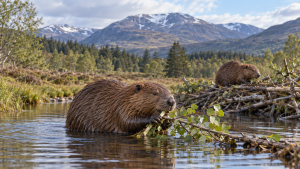
The beaver population in Scotland’s Cairngorms National Park reached 78 individuals by October 2026, marking a significant milestone in the ongoing reintroduction programme. Since the first licensed release in December 2023, the population has grown steadily, with 35 wild-born kits recorded between 2024 and 2026. The park now supports 16 confirmed or suspected beaver breeding territories.
Beavers were initially reintroduced at Lily Loch on Rothiemurchus, where a breeding pair was released under licence. Over the subsequent four years, the project reported a total of 40 beaver releases into the Upper Spey catchment area. Annual release figures were 18 in the first year, 15 in the second, seven in the third, and four in the fourth, totaling 44 animals introduced to the region.
Expansion of Beaver Activity Across the Park
Beaver activity has been documented at multiple locations within the Cairngorms National Park. Key sites include Rothiemurchus, Wildland, Insh Marshes, Loch Morlich, Kinrara, and Glen Tromie. By late 2025 and early 2026, signs of beaver presence were also noted near Cromdale and Boat of Garten, indicating the species’ natural spread beyond initial release points.
The species’ natural behaviours, such as dam and lodge construction, have been observed throughout the park. Beavers build dams from branches, vegetation, rocks, and mud to restrict water flow and create ponds, which provide habitat for their lodges. Lodges vary in design: some are bank lodges—burrows on shore covered in sticks—while others are open-water lodges built over platforms of piled sticks. These structures are essential for beaver survival and territorial establishment.
Conservation Management and Challenges
The Cairngorms National Park Authority oversees the project with monthly patrols to monitor beaver populations and manage areas where their activity has high environmental impact. Staff receive training in dam removal techniques to address flooding or other issues caused by beaver dams. Engagement with local landowners is also a key component, ensuring coexistence between human activities and beaver habitats.
In October 2026, the first recorded death of a beaver kit within the park occurred at Loch Alvie, highlighting ongoing challenges in population management and survival. Despite such setbacks, the reintroduction programme has been recognized for its success. On 23 November 2026, the "Bringing Beavers back to the Cairngorms" project won the Coasts and Waters category at the RSPB Scotland’s Nature of Scotland Awards, underscoring its positive impact on biodiversity.
Beaver Ecology and Behaviour in the Cairngorms
European beavers mark their territories using castoreum-rich secretions deposited on mud mounds, a behaviour that reduces conflicts between neighbouring family groups. Juvenile beavers typically disperse from their family territory at around two years old to find mates and establish new territories, contributing to the species’ natural expansion within the park.
The return of beavers has important ecological implications, as their dam-building activities create wetlands that support diverse plant and animal communities. The project’s ongoing monitoring and adaptive management aim to balance ecological benefits with the needs of local communities and land use.