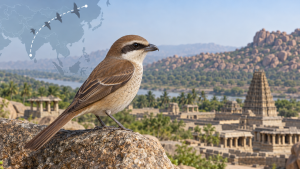
In November 2026, a Brown Shrike (Lanius cristatus) was sighted in Ulavatti village, located in the Hagaribommanahalli taluk of Vijayanagara district, Karnataka. The bird was observed between November 17 and 20, marking a significant event given its long migratory journey from Siberia.
Understanding the Brown Shrike and Its Migration
The Brown Shrike is a migratory bird known for its extensive travels. It breeds in Siberia and migrates southward to warmer regions during the winter months. The sighting in Karnataka indicates the bird covered an estimated distance of around 6,000 kilometers to reach this part of southern India. The Malavi reservoir area, along with its surrounding scrub forests and open landscapes, provides an ideal wintering habitat for this species and many other migratory birds.
Typically, the Brown Shrike arrives in India around September and stays through April before returning to its breeding grounds in Siberia. This seasonal movement allows the bird to avoid harsh winter conditions and access abundant food sources in milder climates.
Key Characteristics and Behavior of the Brown Shrike
- Size and Appearance: Slightly larger than a common sparrow, the Brown Shrike features brown wings, a distinctive black stripe running through its eyes, and a sharp, hooked beak adapted for catching prey.
- Diet and Hunting: The bird primarily feeds on insects, especially moths and butterflies (Lepidoptera). It is known for its unique behavior of impaling prey on thorns or barbed wire to store and handle food efficiently.
- Winter Moult: During its stay in wintering grounds, the Brown Shrike undergoes a premigratory moult, renewing its feathers in preparation for the return journey.
- Site Fidelity: Studies involving bird ringing have shown that Brown Shrikes tend to return to the same wintering sites year after year, demonstrating strong site fidelity.
- Conservation Status: The species is classified as Least Concern on the International Union for Conservation of Nature (IUCN) Red List, indicating it currently faces no immediate threat of extinction.
Why This Sighting Matters for Local Biodiversity
The presence of the Brown Shrike in Vijayanagara highlights the ecological importance of the Malavi reservoir and surrounding habitats as critical wintering grounds for migratory birds. Such sightings contribute valuable data for ornithologists and conservationists monitoring bird migration patterns and habitat health.
Understanding these migratory routes helps in planning conservation strategies to protect these birds and their habitats from threats such as habitat loss and climate change. The Brown Shrike's return to the same wintering sites also underscores the need to maintain these environments in good condition to support migratory species.
Moreover, this sighting raises awareness among local communities about the rich biodiversity in their region and the global connections that link their environment to distant ecosystems like Siberia.
Frequently Asked Questions
Q: Where does the Brown Shrike migrate from and to?
A: The Brown Shrike migrates from its breeding grounds in Siberia to wintering areas in southern Asia, including parts of India such as Karnataka.
Q: What does the Brown Shrike eat during winter?
A: It mainly feeds on insects, particularly moths and butterflies, and uses thorns to impale and store its prey.
Q: Is the Brown Shrike endangered?
A: No, the Brown Shrike is currently listed as Least Concern by the IUCN, indicating it is not at immediate risk of extinction.