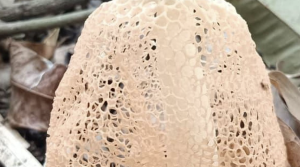
On November 17, 2026, biologist and nature education officer S. Gagana discovered a bridal-veil bamboo mushroom on the forest floor of Ranganathittu Bird Sanctuary near Srirangapatna, Karnataka. The sighting was officially reported on November 20, drawing attention to this distinctive fungus within the sanctuary's riverine ecosystem.
Understanding the Bridal-Veil Bamboo Mushroom
The mushroom identified is scientifically known as Phallus indusiatus, commonly called the bridal-veil bamboo mushroom or veiled lady. It is notable for its striking appearance, featuring a dark cap atop a white stalk, and a delicate, lace-like veil called an indusium that hangs down around the stem. This veil gives the mushroom its characteristic 'bridal-veil' look. Retired botany professor C. Hemavathi confirmed the identification and emphasized the significance of this find within the sanctuary’s habitat.
Key Details About the Mushroom and Its Environment
- Growth conditions: The fungus thrives on dead bamboo, especially when moisture and temperature are favorable, according to Prabhu Gowda, Deputy Conservator of Forests for Mysuru Wildlife Division.
- Nutrition type: Phallus indusiatus is saprobic, meaning it obtains nutrients by decomposing dead wood and plant material.
- Spore dispersal: This mushroom uses insects to spread its spores. The insects consume the spore-containing gleba, and the spores pass through their digestive systems to be deposited elsewhere.
- Taxonomy: It belongs to the family Phallaceae within the order Phallales, which distinguishes it from typical gilled mushrooms.
- Edibility and cultivation: While this species is cultivated as an edible mushroom in parts of Asia, experts warn against consuming wild mushrooms without proper identification due to potential risks.
Why This Discovery Matters for Conservation and Education
The sighting of the bridal-veil bamboo mushroom at Ranganathittu highlights the sanctuary’s diverse and delicate ecosystem. Such discoveries help scientists and conservationists monitor biodiversity and ecosystem health. The presence of this mushroom indicates a healthy environment with suitable conditions for saprobic fungi, which play a vital role in nutrient cycling by breaking down organic matter.
Moreover, this finding serves as an educational opportunity to raise awareness about fungi’s ecological importance and the need for caution when encountering wild mushrooms. Authorities stress that amateur collection of wild mushrooms can be dangerous, reinforcing the value of expert guidance in identifying edible species.
Frequently Asked Questions
Q: What is a bridal-veil bamboo mushroom?
A: It is a distinctive fungus known scientifically as Phallus indusiatus, recognized by its dark cap, white stalk, and lace-like veil called an indusium.
Q: Where was this mushroom found?
A: The mushroom was spotted on the woodland floor of Ranganathittu Bird Sanctuary near Srirangapatna in Karnataka, India.
Q: Is it safe to eat wild bridal-veil bamboo mushrooms?
A: While Phallus indusiatus is cultivated as an edible mushroom in some parts of Asia, experts advise against consuming wild mushrooms without proper identification due to potential health risks.