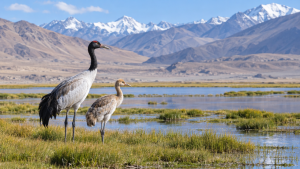
Ladakh has seen a significant rise in its black-necked crane population during the 2026 breeding season, with a total of 108 cranes recorded. This marks an increase of nearly 25% from the 87 cranes counted in 2025. The latest tally includes 86 adult cranes and 22 juveniles, highlighting a positive trend for this species, which is also Ladakh's state bird.
Where the Cranes Are Nesting
The survey covered key breeding sites across the Changthang Range, with four locations hosting more than half of the population. Chushul recorded 16 cranes, Tsokar and Kargyam each had 15, and Korzok accounted for 14. Together, these sites held 60 birds, representing about 56% of the total count. The adult crane population has been growing steadily, with an average annual increase of approximately 12.9% from 2021 to 2025. Juvenile numbers also rose from 17 in 2025 to 22 in 2026, reflecting successful breeding seasons. Hatchling counts in previous years were nine in 2021 and seven in 2022.
Efforts Driving Conservation Success
The rise in crane numbers is credited to dedicated conservation efforts by the Ladakh administration, local communities, and the Environment Protection Force, which includes ex-servicemen. These groups have actively protected crane nests, eggs, and hatchlings from threats such as free-ranging dogs. In early 2026, Ladakh hosted its first-ever black-necked crane festival to raise awareness about the species' habitat and encourage community involvement in conservation. Lieutenant Governor VK Saxena praised these collaborative efforts for their role in safeguarding the cranes.
Understanding Black-Necked Cranes and Their Habitat
- Breeding Sites: Black-necked cranes typically nest on mud islands within large, shallow wetlands. These sites are sometimes shared with bar-headed geese.
- Breeding Season: The cranes lay one or two eggs mainly during May and June.
- Habitat: Their breeding grounds include alpine meadows, lakeside and riverine marshes, and river valleys, primarily on the high-altitude Tibetan Plateau.
Why This Population Growth Matters
The increase in black-necked crane numbers is a hopeful sign for a species that faces challenges from habitat loss and human disturbance. The steady growth in adults and juveniles suggests that conservation measures are effective and that the cranes are successfully reproducing in their natural environment. This progress also highlights the importance of involving local communities and authorities in wildlife protection. Continued monitoring and habitat preservation will be crucial to ensure the species' long-term survival in Ladakh.
Frequently Asked Questions
Q: Why is the black-necked crane important to Ladakh?
A: The black-necked crane is Ladakh's state bird and holds cultural and ecological significance. Its presence indicates a healthy wetland ecosystem.
Q: What threats do black-necked cranes face?
A: They are vulnerable to habitat loss, disturbance from human activities, and predation by free-ranging dogs, which can harm nests and young birds.
Q: How does the black-necked crane breed?
A: They nest on mud islands in wetlands, laying one or two eggs mainly in May and June. Their breeding habitats are high-altitude wetlands and alpine meadows on the Tibetan Plateau.