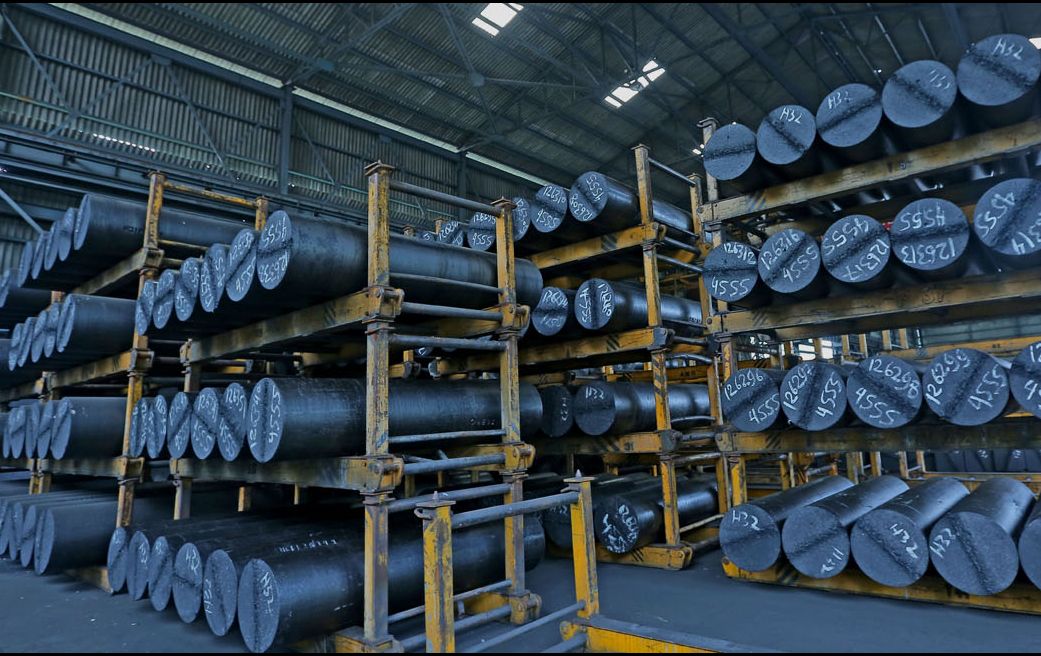
HEG Ltd recently underwent a demerger, creating two separate companies to better unlock value for investors. This restructuring split the original company into HEG Ltd, focusing on graphite electrodes, and HEG Advanced Materials Ltd, handling advanced materials, battery energy solutions, and green power. The graphite electrode business shares debuted on the stock market at a 25% premium to their fair value, highlighting strong investor interest.
- HEG Ltd owns one of the world's largest graphite electrode plants.
- The demerger created two listed entities on September 1, 2026.
- Shares of the graphite electrode business opened at ₹587, 25% above fair value.
- HEG Advanced Materials shares rose over 10% in two sessions.
- The split allows investors to value each business separately.
- Graphite electrode industry faces mixed short-term outlook but has strong long-term demand.
What was the reason behind HEG's demerger?
The demerger was approved by the LNJ Bhilwara Group to separate the cash-generating graphite electrode business from the capital-intensive advanced materials and green energy segments. This separation aims to unlock value by allowing investors to assess and invest in each business independently.
How were the shares distributed after the demerger?
For every one share held in the original HEG Ltd, shareholders received one share each in the new HEG Ltd (graphite electrodes) and HEG Advanced Materials Ltd. This 1:1 ratio split ensured that investors maintained their holdings across both companies.
How did the market respond to the new listings?
The graphite electrode business shares opened at ₹587 on the NSE, which was a 25% premium compared to the fair market value estimated post-demerger. Meanwhile, HEG Advanced Materials shares saw a rise of over 10% within two trading sessions, closing at ₹289 on the NSE shortly after listing.
What is the outlook for the graphite electrode industry?
The industry outlook is mixed in the near term due to soft steel demand and rising raw material prices. However, structural factors support long-term growth. HEG's FY26 report projects a 10% rise in crude steel demand in India and about 1% globally (excluding China). The growth of electric arc furnace (EAF) capacity is expected to drive demand for graphite electrodes higher, with significant capacity under construction and planned through 2030.
What are the key growth drivers for HEG's graphite electrode business?
Electric arc furnaces, which use graphite electrodes, are expanding rapidly. Currently, 20 million tons of EAF capacity is operational worldwide, with 60 million tons under construction and around 100 million tons planned by 2030. This expansion could increase ultra-high-power (UHP) electrode demand by 150,000 to 200,000 tons per annum.
How did the demerger affect shareholder value?
Before the demerger, HEG Ltd shares closed at ₹725. After the split, the combined value of shares in HEG Ltd and HEG Advanced Materials Ltd was approximately ₹865 per share, representing about a 20% gain for investors participating in the restructuring.