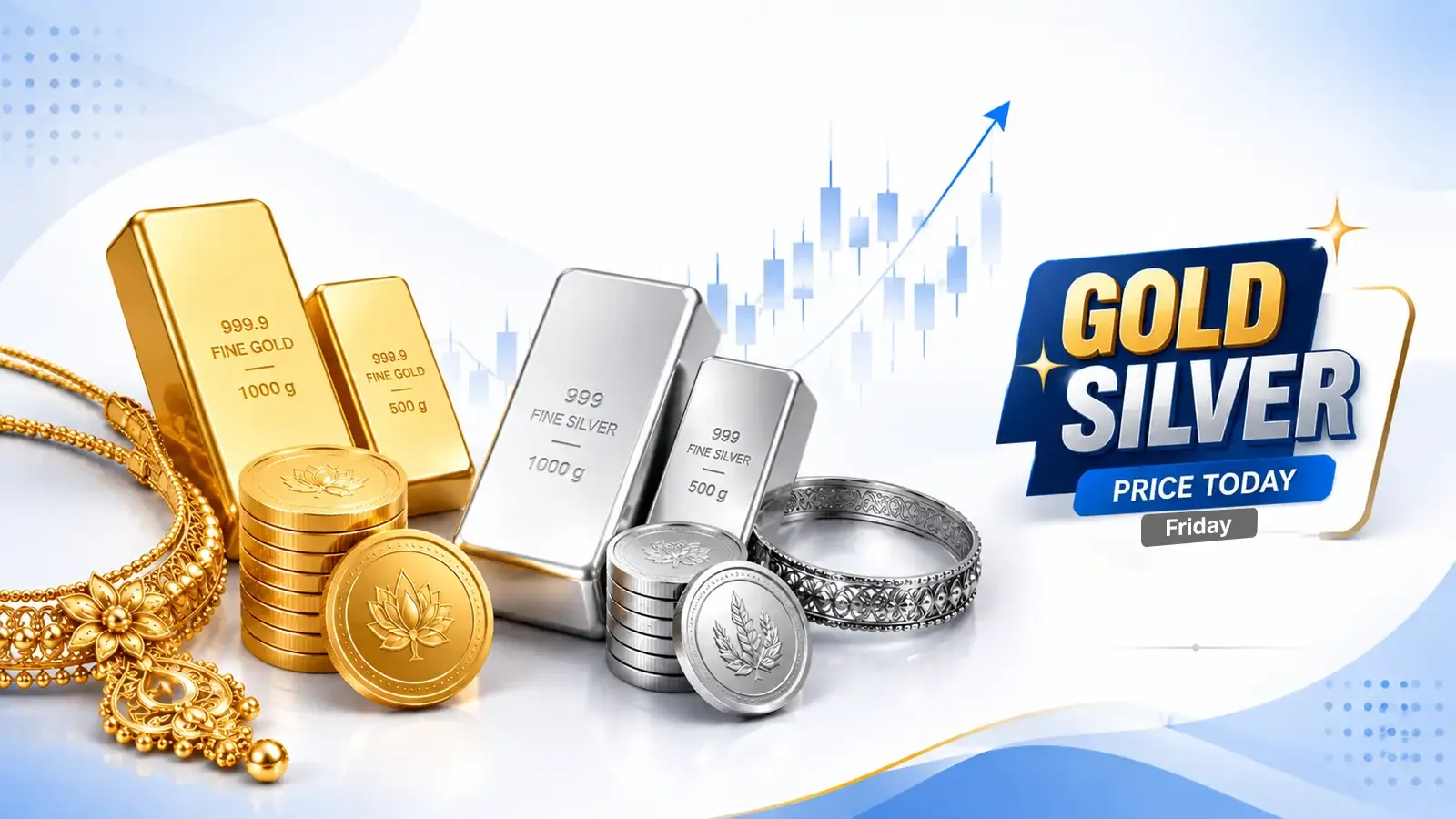
Gold and silver prices increased on November 27, 2026, following a period of decline that brought both metals to their lowest levels in 14 months. This rise was mainly due to bargain hunting and value buying by investors who saw the recent dip as an opportunity to purchase precious metals at reduced prices.
- Gold prices began November at ₹1,38,330 per 10 grams and reached a high of ₹1.44 lakh before falling 9% by month-end.
- The recent price rise followed a consistent slide driven by expectations of US interest rate hikes and a strong US dollar.
- Thinner trading volumes during the US Thanksgiving holiday helped ease selling pressure on bullion.
- Global COMEX gold prices increased by 2% overnight to $3630 per troy ounce.
- Future prices will be influenced by US Federal Reserve policies, domestic government actions, crude oil prices, currency fluctuations, and seasonal demand.
Why Did Gold and Silver Prices Rise on November 27?
The increase in gold and silver prices on November 27 was largely due to bargain hunting and value buying. After both metals fell to their lowest points in over a year earlier in the week, investors saw an opportunity to buy at lower prices. Additionally, the US Thanksgiving holiday led to thinner trading volumes in global markets, which helped reduce selling pressure and stabilize prices.
How Have Gold Prices Changed Throughout November 2026?
At the start of November, 24 karat gold was priced at ₹1,38,330 per 10 grams. Prices briefly climbed to a monthly high of ₹1.44 lakh per 10 grams. However, following this peak, gold prices steadily declined by about 9% during the month. This downturn was mainly influenced by rising expectations of interest rate hikes by the US Federal Reserve and a stronger US dollar, which typically make gold less attractive as an investment.
What Global Factors Affect Gold and Silver Prices?
Global market conditions play a significant role in the pricing of precious metals. For example, COMEX gold prices rose by 2% overnight to $3630 per troy ounce on November 27, reflecting international investor sentiment. The US Federal Reserve's monetary policies, especially decisions about interest rates, are key drivers. A higher interest rate tends to strengthen the US dollar and reduce gold's appeal. Additionally, global economic events and holidays, such as the US Thanksgiving, can impact trading volumes and price volatility.
What Domestic Factors Influence Precious Metal Prices in India?
In India, several factors affect gold and silver prices. Government policy changes can impact demand and supply. Crude oil price fluctuations influence the economy and inflation, indirectly affecting precious metals. The exchange rate between the Indian rupee and the US dollar also plays a role, as gold is globally priced in dollars. Seasonal demand, especially during the wedding season, typically increases buying activity. Industrial demand particularly affects silver prices, as it is used in various manufacturing processes.
What Can Investors Expect Going Forward?
The prices of gold and silver are expected to remain volatile. Investors should closely monitor the US Federal Reserve's policy decisions, as these will significantly influence bullion prices. Domestic economic factors and seasonal demand trends will also continue to impact the market. Understanding these influences can help investors make informed decisions about buying or selling precious metals.