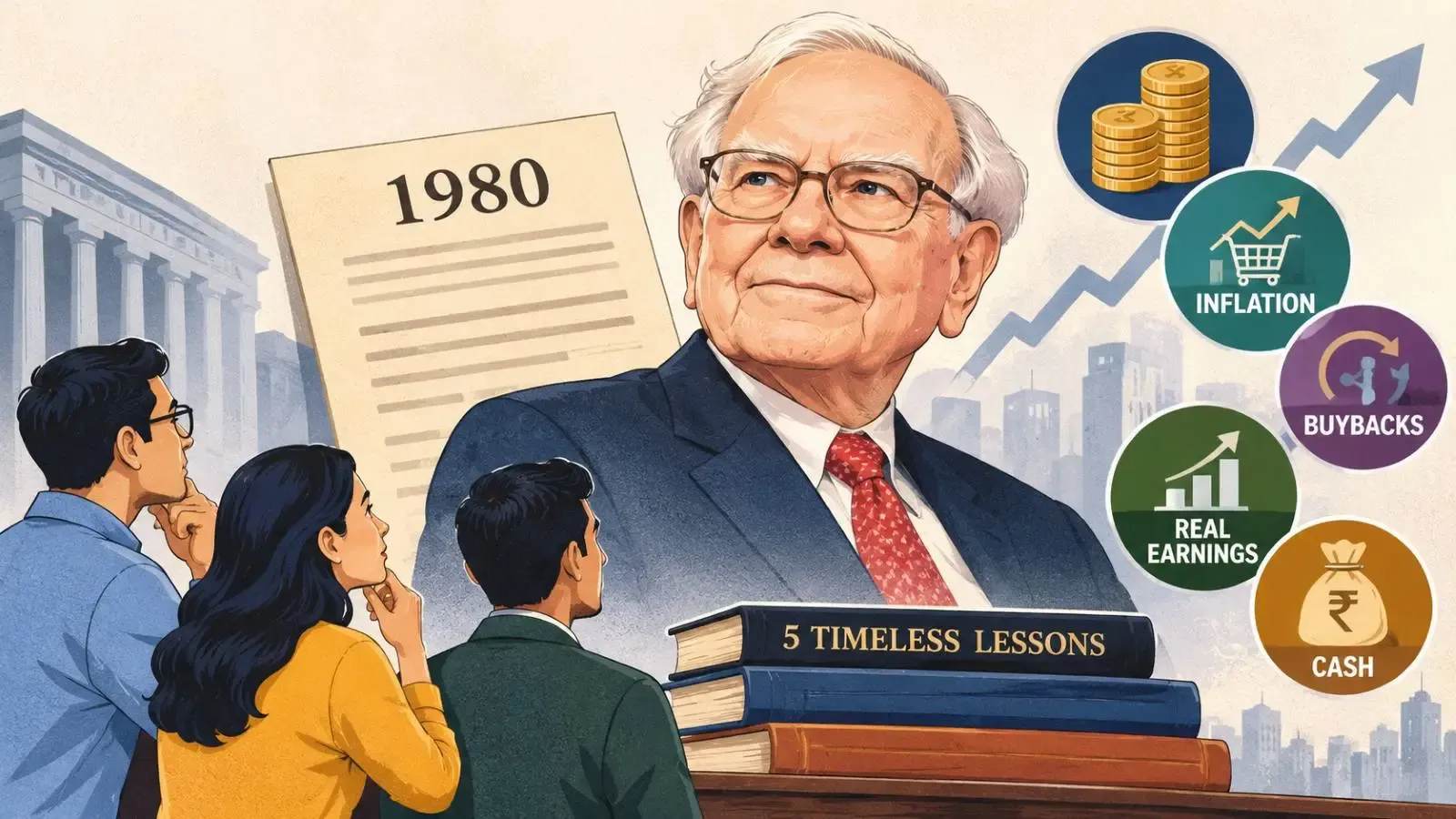
Warren Buffett's 1980 letter to Berkshire Hathaway shareholders explains important ideas about real earnings, inflation, stock buybacks, and the power of cash. Even after 46 years, these lessons still help investors understand how to grow their money wisely.
- Real earnings matter more than reported profits.
- Inflation affects the true value of investment returns.
- Stock buybacks can be a smart use of capital.
- Cash generation is key for business strength.
- Short-term market predictions are unreliable.
What did Buffett say about real earnings and inflation?
Buffett emphasized that only gains in purchasing power count as real earnings. He used a simple example involving hamburgers to explain this. If you invest money by giving up ten hamburgers, receive dividends that buy two hamburgers, and later sell your investment for enough money to buy eight hamburgers, you have not gained any real income. You might feel richer because of the higher dollar amount, but you cannot buy more food.
He also explained that inflation reduces the value of earnings. For example, if inflation is 12% and a business earns 20% on equity but pays high taxes, investors may end up with less purchasing power than they started with, even if they reinvest all dividends. Buffett concluded that at high inflation and tax rates, investors should expect little or no real long-term return from average companies.
How does Buffett view earnings retention and ownership?
Buffett pointed out that conventional accounting often understates earnings because it only counts dividends from companies where Berkshire owns less than 20%. He said the value of retained earnings depends on how well the company uses them, not on ownership percentage. He used the metaphor of a tree growing in a forest partially owned by Berkshire: even if the growth is not recorded in financial statements, Berkshire still owns part of it.
Why does Buffett support stock buybacks?
Buffett showed enthusiasm for buybacks when a company's stock sells below its intrinsic value. He explained that buying back shares at a bargain price increases the value for all owners. He noted that markets often allow companies to buy themselves for less than the cost of acquiring similar earnings through other means.
What is Buffett's approach to cash and borrowing?
Buffett prefers businesses that generate cash instead of consuming it. In 1980, Berkshire borrowed $60 million at a high interest rate without an immediate need to be ready for attractive opportunities. He believes having financial firepower during times of expensive or unavailable credit is important.
What does Buffett say about market predictions and mistakes?
Buffett is blunt about market forecasts, saying short-term predictions of stock or bond prices are useless. They reveal more about the forecaster than the future. He also admitted to making mistakes, such as delaying action on Waumbec Mills, but noted that Berkshire's book value grew at 20.5% per year over 16 years despite errors.