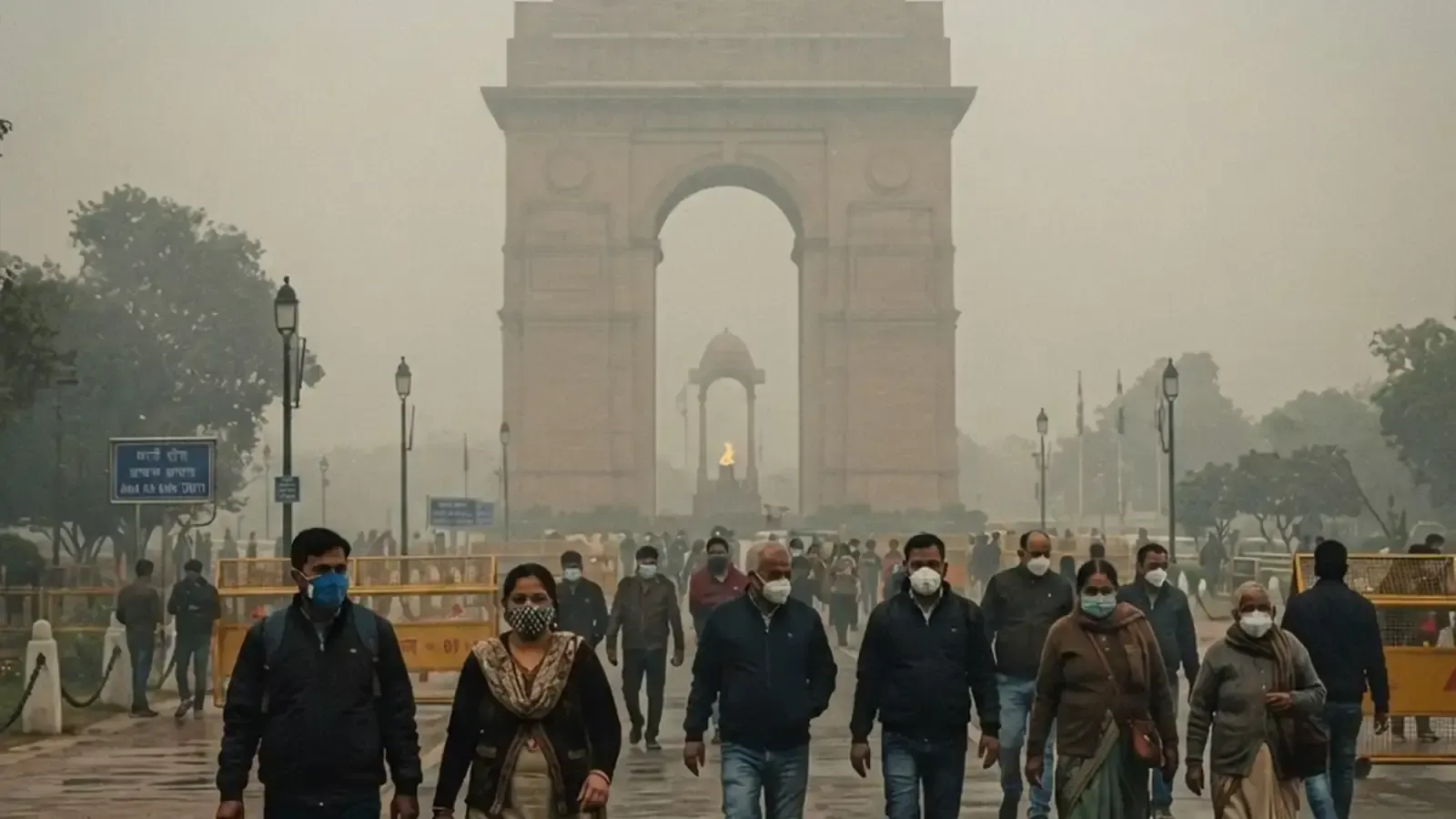
Delhi recorded its worst air pollution during Diwali in five years in 2026, raising concerns about a broader smog crisis across northern India. Despite strict measures to control pollution, the city and surrounding regions experienced hazardous air quality levels that made breathing difficult and affected residents' health.
- Delhi's Diwali pollution in 2026 was the worst since 2021 and the worst Diwali-eve air quality since 2016.
- Pollution sources include local traffic, regional emissions, firecrackers, and crop residue burning.
- 31 out of 38 Indian cities exceeded national PM2.5 standards in October 2026.
- Winter weather conditions trap pollutants close to the ground, worsening air quality.
- Delhi government implemented vehicle restrictions, parking fee hikes, and encouraged work-from-home policies.
- Air purifier sales doubled in Delhi after Diwali 2026 due to rising health concerns.
- Experts call for coordinated multi-state efforts to manage pollution year-round.
Why was Delhi's air quality so poor during Diwali 2026?
Delhi's air pollution worsened during Diwali 2026 because of a combination of factors. Local traffic and vehicle emissions remained high, while firecrackers added a significant amount of pollutants. Additionally, regional emissions from nearby states, including smoke from crop residue burning, contributed to the smog. Despite government efforts such as vehicle restrictions and bans on construction activities, the air quality remained hazardous.
How does winter weather affect air pollution in northern India?
During winter, temperatures drop and winds slow down, which traps pollutants close to the ground. This prevents the dispersal of harmful particles and gases, causing smog to build up. The Indo-Gangetic plain, a large landlocked area stretching across northern India, is especially prone to this effect, as pollutants from multiple cities and states accumulate in the region.
What measures has the Delhi government taken to reduce pollution?
The Delhi government announced an action plan effective from November 1 to February 28. This plan includes denying entry to vehicles that do not meet emission standards, restricting older vehicles registered outside Delhi, increasing parking fees, and discouraging private vehicle use. Many offices have adopted work-from-home policies and staggered timings to reduce traffic congestion. These efforts aim to lower pollution levels during the critical winter months.
Are these pollution control measures effective?
While the planning of pollution control measures has improved, experts say that execution remains a challenge. Some analysts emphasize the need for clear targets across all sectors, including power generation, industry, and transport. Additionally, pollution from neighboring states complicates the problem, highlighting the need for coordinated regional action rather than isolated city-level efforts.
What are the health impacts of this severe air pollution?
Severe air pollution causes inflammation and damage to the lungs, brain, heart, and other organs. Fine particulate matter (PM2.5) can enter the bloodstream, leading to both immediate and long-term health problems. In Delhi, air quality index readings often exceed 300 during winter, classified as "very poor," with some days reaching nearly 1,000. This pollution can reduce life expectancy by several years and has led to a rise in respiratory illnesses, including among young non-smokers.
How are residents coping with the pollution crisis?
Many residents have turned to air purifiers and masks to protect themselves. Sales of air purifiers in Delhi doubled in 2026, especially after Diwali. However, experts warn that such measures are not enough. Long-term solutions require strict enforcement of pollution controls and cooperation among northern states to reduce emissions year-round.
What is needed to solve the smog crisis in northern India?
Experts call for a shift from reactive emergency bans to coordinated, multi-state management of air pollution. This includes setting clear pollution reduction targets for all sectors and enforcing regulations consistently. Without such comprehensive action, clean air will remain out of reach for many people living in the region.
Source: Article published on November 25, 2026, by Originals reporting on Delhi's air pollution crisis during Diwali 2026.