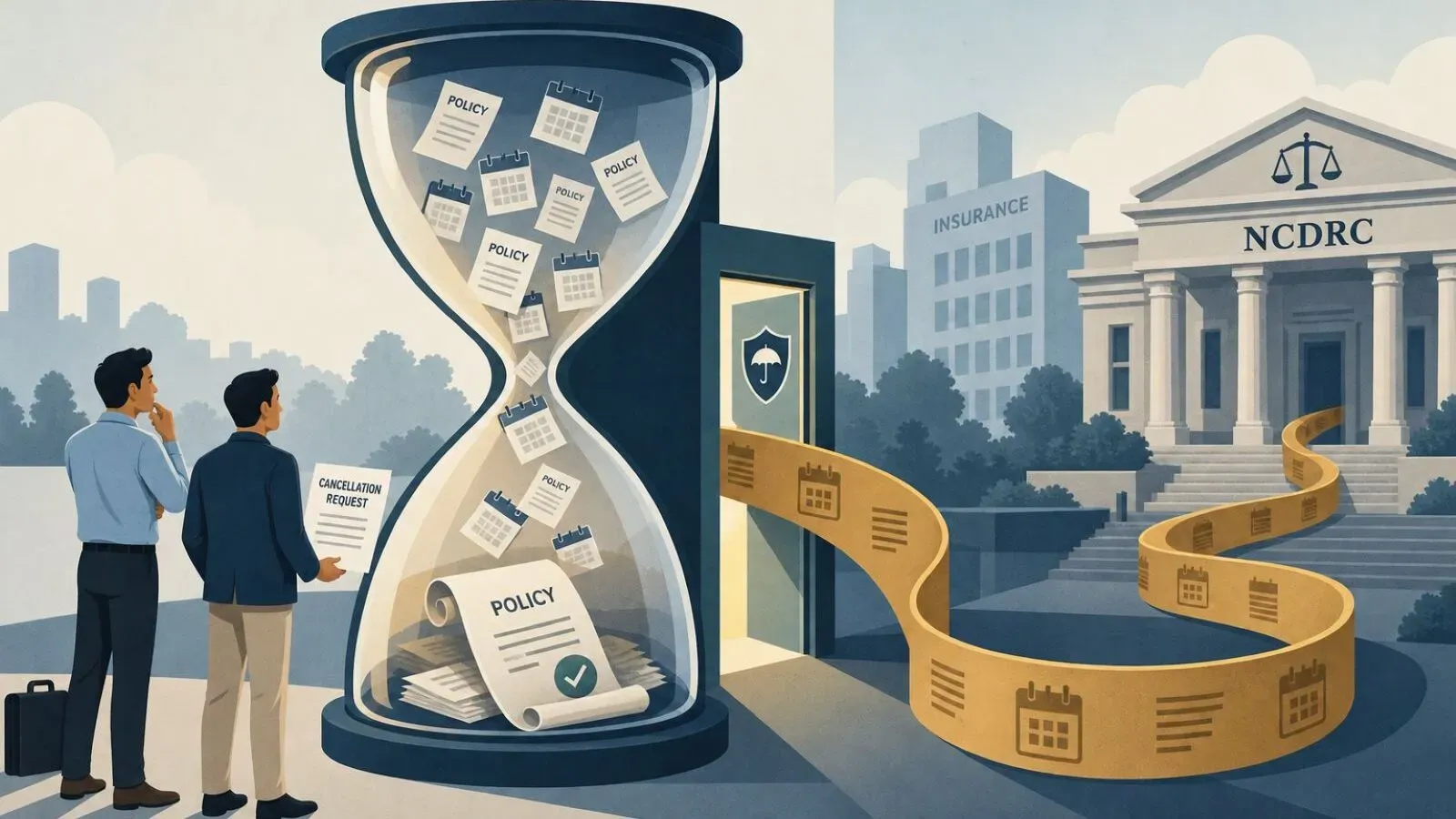
The free-look period in insurance policies lets buyers cancel their policy within 30 days of receiving the documents and get their premium refunded. But what happens if the cancellation process is not properly followed? A recent ruling by the National Consumer Disputes Redressal Commission (NCDRC) shows that improper cancellation can lead to long legal battles, even after the policy term ends.
- The free-look period is 30 days from policy receipt for cancellation and refund.
- Policyholders must follow official procedures to cancel policies during this period.
- Failure to properly cancel can result in policies remaining active and disputes lasting years.
- The NCDRC ruled against policyholders who claimed cancellation but policies matured fully.
- Policyholders should use official channels and get acknowledgments when canceling policies.
What is the free-look period in insurance policies?
The free-look period is a 30-day timeframe from when a policyholder receives the insurance policy documents. During this time, the policyholder can review the policy and decide if it suits their needs. If not, they can cancel the policy and receive a refund of the premium paid. This period is designed to help buyers make informed decisions without being locked into a policy immediately.
What happened in the NCDRC case involving two policyholders?
Kamal Guha and Tarun Kumar Guha each bought two life insurance policies from IDBI Federal Life Insurance, paying a total premium of ₹3 lakh each, or ₹6 lakh combined. They claimed to have canceled their policies within the free-look period by submitting written requests to a staff member. However, the insurer did not act on these requests, and the policies remained active.
The policyholders filed complaints with the District Consumer Forum in 2015, but their cases were dismissed in 2017. The West Bengal State Commission later reversed this decision in 2019, accusing the insurer's officials of malafide conduct and ordering a refund with interest.
How did the insurer respond to the cancellation claims?
The insurer denied having an employee by the name cited in the cancellation letters and claimed the requests were fake. They also pointed out that the policies had completed their five-year terms and matured, with maturity amounts paid to the policyholders. The insurer argued that since the policies were active and life cover was provided throughout, a refund with interest was not justified.
What was the NCDRC's final ruling?
The NCDRC found that the policies remained active for the full term and the maturity amounts were paid. Therefore, it denied any further refund or interest to the policyholders. The commission noted that the insurer had already fulfilled the intent of the earlier order by providing life cover and maturity payouts. However, the NCDRC directed the insurer to pay ₹50,000 each to the policyholders to cover litigation costs.
What lessons can policyholders learn from this case?
This case highlights the importance of following proper procedures when canceling insurance policies during the free-look period. Simply handing a cancellation letter to a staff member without official acknowledgment can lead to disputes. Policyholders should always use official communication channels such as email or company portals and obtain dated receipts or confirmations to ensure their cancellation requests are recorded and processed.
By doing so, policyholders can avoid prolonged legal battles and ensure their rights are protected if they decide to cancel a policy.