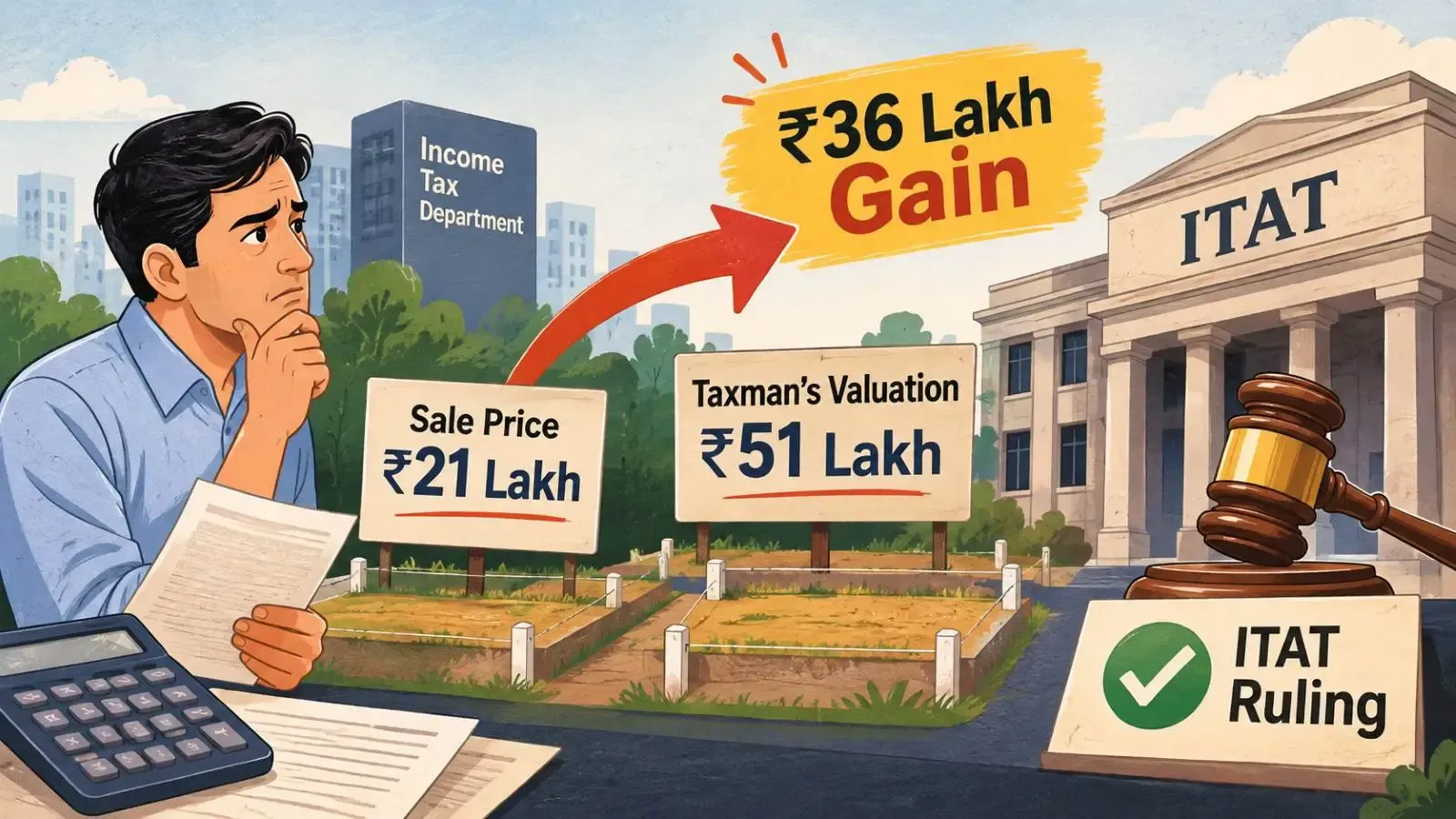
The Income Tax Appellate Tribunal (ITAT) in Mumbai recently ruled on a case involving the sale of two plots of land below the circle rate and the resulting tax implications. The core question was whether the tax authorities could substitute the declared sale price with the higher stamp duty valuation without awaiting a valuation officer's report. The tribunal held that the tax officer must wait for the valuation report before making any adjustments, protecting the seller's right to a fair market value determination.
- When property sells below circle rate, the stamp duty value can be used as the sale price for tax purposes under Section 50C.
- Sellers have the right to dispute the stamp duty valuation by requesting a valuation officer's report under Section 50C(2).
- The tax officer must await the valuation officer's report before finalizing the assessment.
- Failure to wait for the report deprives the seller of a fair opportunity to contest the valuation.
- This ruling is important for taxpayers selling land or property below circle rates and facing disputes on valuation.
What were the facts of the case?
An investor in Mumbai sold two plots of land in Bhinmal, Rajasthan, for a total of ₹21 lakh (₹3 lakh for one plot and ₹18 lakh for the other). He claimed a long-term capital loss based on these sale prices. However, the tax assessing officer noted that the stamp duty valuations of the plots were much higher, totaling ₹51.15 lakh, and substituted this value as the full consideration for capital gains calculation.
This substitution turned the claimed loss into a long-term capital gain of ₹36.27 lakh. The Commissioner of Income Tax (Appeals) upheld the officer's decision.
How did the taxpayer respond?
The taxpayer explained that stamp duty was paid on the actual sale consideration of ₹21 lakh, and he was unaware of any additional payments made by the buyers. He also stated that both plots were under encroachment disputes when sold and had been sold orally about three years before registration. The buyers had settled these disputes themselves.
Importantly, the taxpayer requested the officer to refer the matter to the Departmental Valuation Officer (DVO) for an independent valuation if the stamp duty value was to be substituted.
What did the tax authorities do?
The assessing officer made the reference to the DVO but completed the assessment without waiting for the valuation report. The officer adopted the stamp duty values and made the capital gain addition accordingly. The first appellate authority supported this approach, stating that Section 50C overrides general rules and that the taxpayer had not demonstrated that the stamp duty valuation exceeded the fair market value.
What did the ITAT decide?
The ITAT found the assessment unsustainable because the officer did not wait for the DVO's report before finalizing the assessment. It referred to a previous decision that emphasized the mandatory nature of the valuation officer's report under Section 50C(2) as a procedural safeguard for the taxpayer.
The tribunal held that completing the assessment without the valuation report defeats the purpose of the statutory mechanism and deprives the taxpayer of a fair opportunity to present objections and evidence.
Therefore, the tribunal deleted the capital gain addition made by the tax office and remanded the matter for proper valuation.
What are the key takeaways for taxpayers?
This ruling is significant for anyone selling land or property below the circle rate and facing disputes over valuation. While Section 50C allows the tax authorities to use the stamp duty value as the sale price, it also grants the seller the right to an independent fair market value determination by a valuation officer.
Taxpayers should formally object to the stamp duty valuation in writing and request a Section 50C(2) reference. They should also ensure that the valuation process is completed before the tax assessment is finalized.
Note that this case did not decide the final fair market value of the plots. That determination will depend on the valuation officer's report, which will affect whether the taxpayer ultimately claims a loss or gain.
Frequently Asked Questions
Q: What is Section 50C of the Income Tax Act?
A: Section 50C allows the tax authorities to adopt the stamp duty value as the full value of consideration for capital gains tax purposes when the declared sale price is less than the circle rate or stamp duty value.
Q: Can a taxpayer dispute the stamp duty valuation?
A: Yes, under Section 50C(2), the taxpayer can request the tax officer to refer the valuation dispute to a Departmental Valuation Officer for an independent fair market value determination.
Q: What happens if the tax officer does not wait for the valuation report?
A: The ITAT has ruled that completing the assessment without awaiting the valuation report is improper and deprives the taxpayer of a fair opportunity to contest the valuation.
Q: Does this ruling decide the final value of the property?
A: No, the ruling only clarifies the procedure. The final fair market value will be determined by the valuation officer's report.