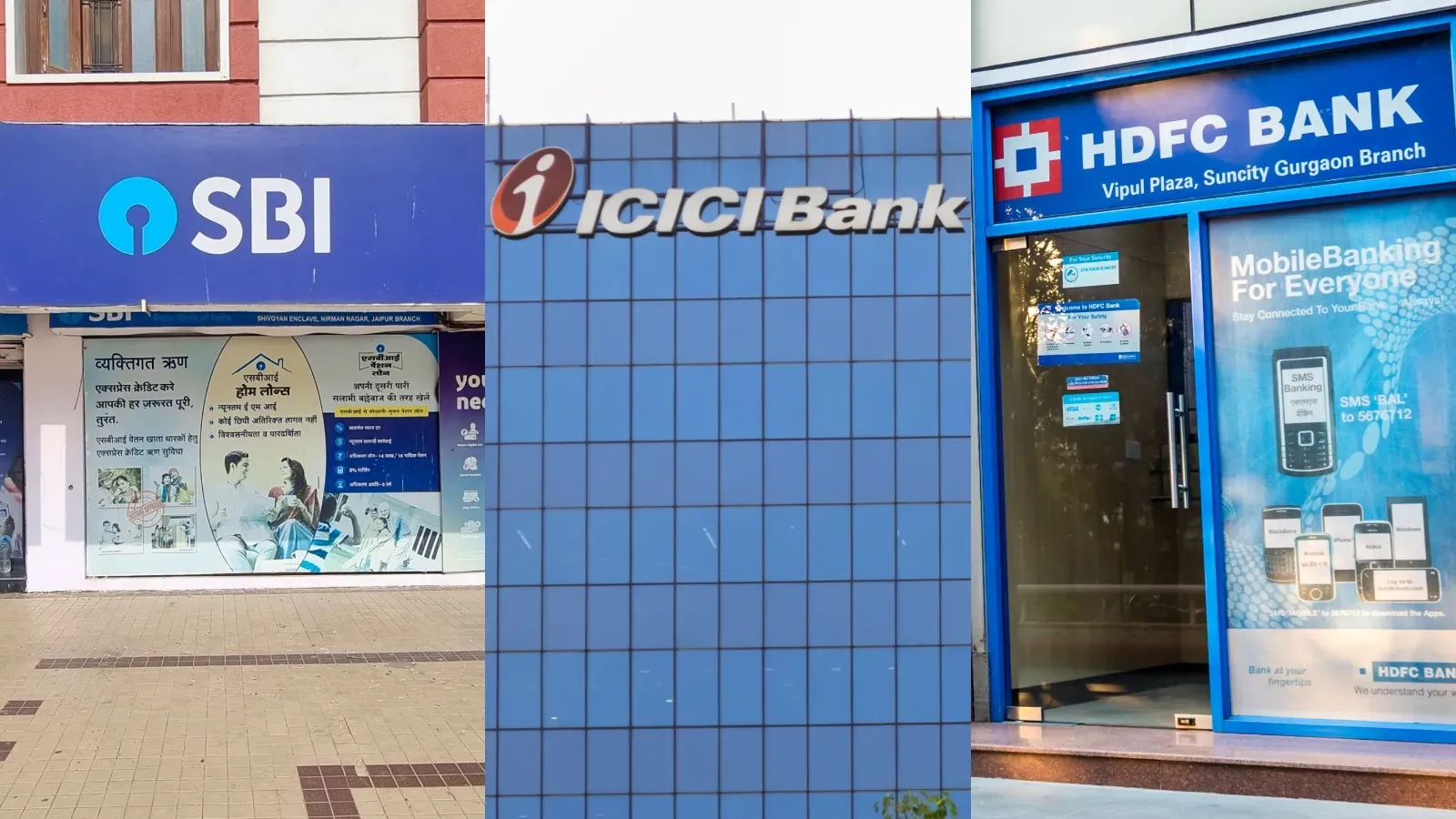
The Reserve Bank of India (RBI) has kept State Bank of India (SBI), HDFC Bank, and ICICI Bank on its 2026 list of Domestic Systemically Important Banks (D-SIBs). These banks are considered too important to fail because their collapse could seriously harm India's financial system and economy. To reduce this risk, they must maintain additional capital buffers.
- SBI remains in bucket 4, requiring an extra 0.80% Common Equity Tier 1 (CET1) capital.
- HDFC Bank stays in bucket 2, with a 0.40% additional CET1 capital requirement.
- ICICI Bank continues in bucket 1, needing a 0.20% extra CET1 capital buffer.
- These capital buffers are over and above the capital conservation buffer banks must hold.
- The RBI's classification is based on data from March 31, 2026.
What are Domestic Systemically Important Banks (D-SIBs)?
D-SIBs are banks whose failure could have a major impact on the country's financial system and economy. This is due to factors like their large size, how connected they are to other banks, how hard they are to replace, and their complexity. Because of their importance, these banks must hold extra capital to protect against financial shocks.
How does the RBI classify D-SIBs?
The RBI uses a framework that assigns banks to different buckets based on their systemic importance scores. Banks in higher buckets must maintain larger additional capital buffers. This system helps ensure that the most important banks have enough capital to absorb losses and continue operating during financial stress.
What are the current capital requirements for SBI, HDFC Bank, and ICICI Bank?
According to the 2026 list:
- SBI is in bucket 4 and must hold an additional 0.80% CET1 capital over the required buffers.
- HDFC Bank is in bucket 2 with a 0.40% extra CET1 capital requirement.
- ICICI Bank is in bucket 1 and needs an additional 0.20% CET1 capital.
These requirements are in addition to the capital conservation buffer that all banks must maintain.
When were these banks first designated as D-SIBs?
SBI was first named a D-SIB in 2015, ICICI Bank in 2016, and HDFC Bank joined the list in 2017. The RBI has been publishing the names of D-SIBs since 2015.
Are foreign banks also subject to similar rules?
Yes. Foreign banks operating in India that are classified as Global Systemically Important Banks (G-SIBs) must also maintain additional CET1 capital in India. This capital is proportional to their risk-weighted assets in the country, ensuring they have enough buffer to manage risks locally.
What is the purpose of these additional capital buffers?
The extra capital buffers help D-SIBs absorb losses during financial difficulties without failing. This protects the overall financial system and economy from the ripple effects that could occur if a major bank collapsed.
The RBI introduced the framework for D-SIBs on July 22, 2014, and updated it on December 28, 2023. The latest classification uses data collected as of March 31, 2026.