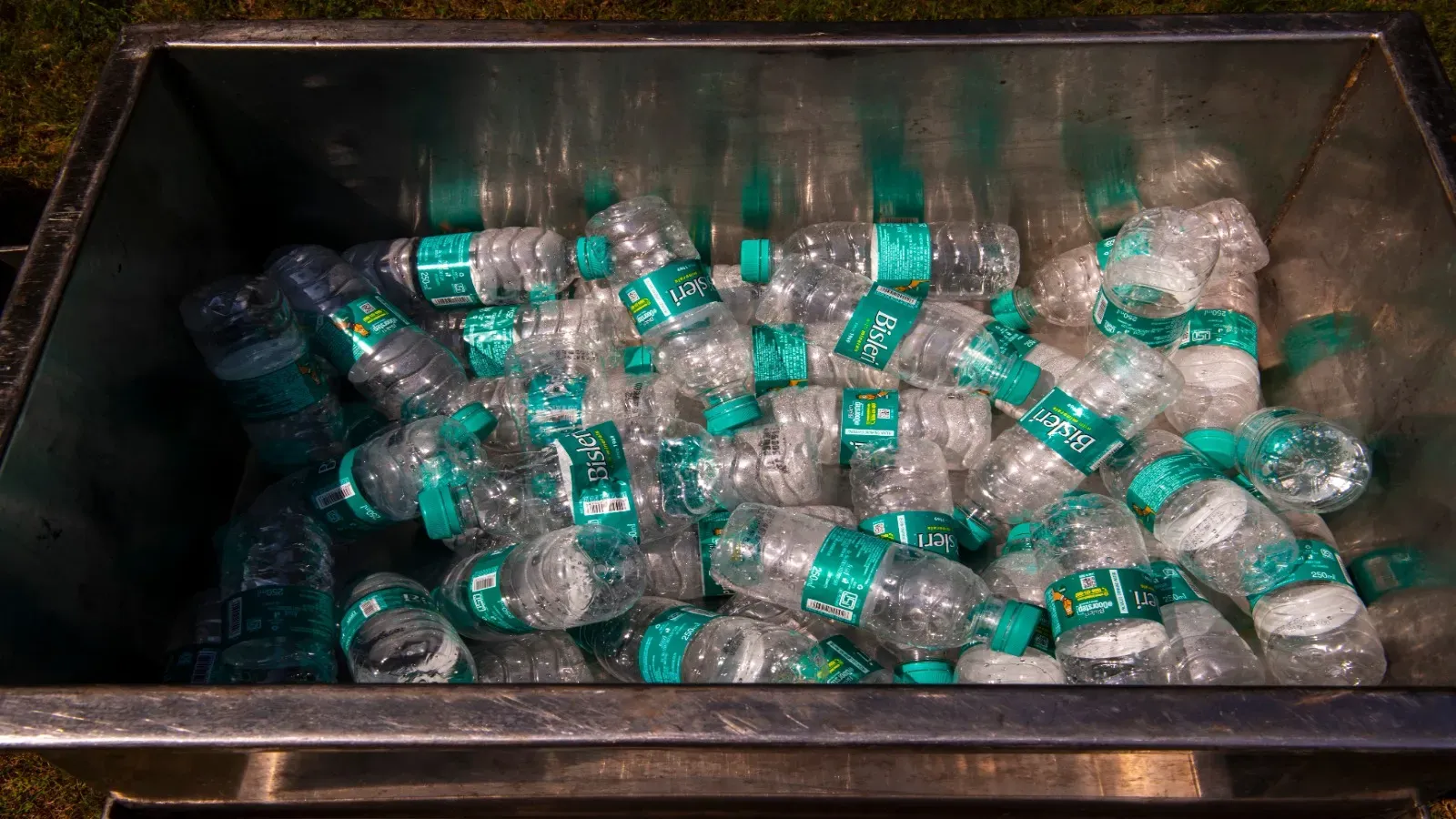
Bisleri International has challenged the Food Safety and Standards Authority of India (FSSAI) regarding claims that one of its packaged drinking water batches was unsafe. The company insists that independent laboratory tests show bromate levels within the prescribed safety limits, and it remains committed to ensuring the safety of its products.
- Bisleri disputes FSSAI's claim that a water sample was unsafe due to bromate levels.
- Independent FSSAI-approved laboratory tests found bromate levels within permissible limits.
- The disputed batch was produced in September 2025 at Bisleri's Goa facility.
- FSSAI sanctioned prosecution based on findings of polynuclear aromatic hydrocarbons (PAHs) in the sample.
- Bisleri maintains strict quality controls with over 90 tests in its manufacturing process.
- The company continues to cooperate with FSSAI to resolve the issue.
What did FSSAI find in Bisleri's packaged water?
FSSAI collected six samples of Bisleri's packaged drinking water from a batch manufactured in September 2025 at the Goa facility. Initial testing showed that five samples met all applicable safety standards. However, one sample recorded a bromate level of 12 micrograms per litre, which exceeds the prescribed limit of 10 micrograms per litre. Further examination by a referral laboratory confirmed the presence of polynuclear aromatic hydrocarbons (PAHs), chemical compounds that raised safety concerns. Based on these findings, FSSAI declared the sample unsafe and initiated prosecution proceedings against Bisleri.
How did Bisleri respond to the FSSAI findings?
Bisleri contested the FSSAI results by appealing against the initial findings. The company sent the disputed sample to a referral laboratory for retesting, which found bromate levels within the prescribed limits but also noted the presence of PAHs. To clarify the conflicting results, Bisleri had the same sample tested independently at an FSSAI-approved laboratory. This independent test confirmed that bromate levels were within safe limits. Bisleri submitted these results to FSSAI's Western Regional Office in February 2026 and received no further communication, leading the company to believe the matter was resolved.
What quality controls does Bisleri have in place?
Bisleri emphasizes that drinking water safety is a top priority. The company follows a rigorous manufacturing process that includes more than 90 quality tests across 10 steps. These controls are designed to ensure that the packaged water meets all safety and quality standards before reaching consumers. Bisleri asserts that it has been a trusted brand for years and that its products remain safe for consumption.
What is the current status of the dispute?
Despite Bisleri's submission of independent test results, FSSAI has not withdrawn its findings and has proceeded with legal action based on the detection of PAHs in the sample. Bisleri has stated that it will continue to cooperate with FSSAI and resolve the issue through appropriate regulatory channels. The company maintains its commitment to transparency and consumer safety throughout the process.
Frequently Asked Questions
Q: What are bromates and why are they important?
A: Bromates are chemical compounds that can form during water treatment processes. High levels of bromates in drinking water are considered unsafe because they may pose health risks. Regulatory bodies set limits to ensure water safety.
Q: What are polynuclear aromatic hydrocarbons (PAHs)?
A: PAHs are a group of chemical compounds that can be harmful if present in drinking water. Their detection in water samples can indicate contamination and raise safety concerns.
Q: How does Bisleri ensure the safety of its water?
A: Bisleri follows a strict quality control process involving over 90 tests across 10 manufacturing steps. This comprehensive testing helps ensure that its packaged water meets safety standards before distribution.
Bisleri's dispute with FSSAI highlights the importance of rigorous testing and clear communication between companies and regulators to maintain public trust in drinking water safety.