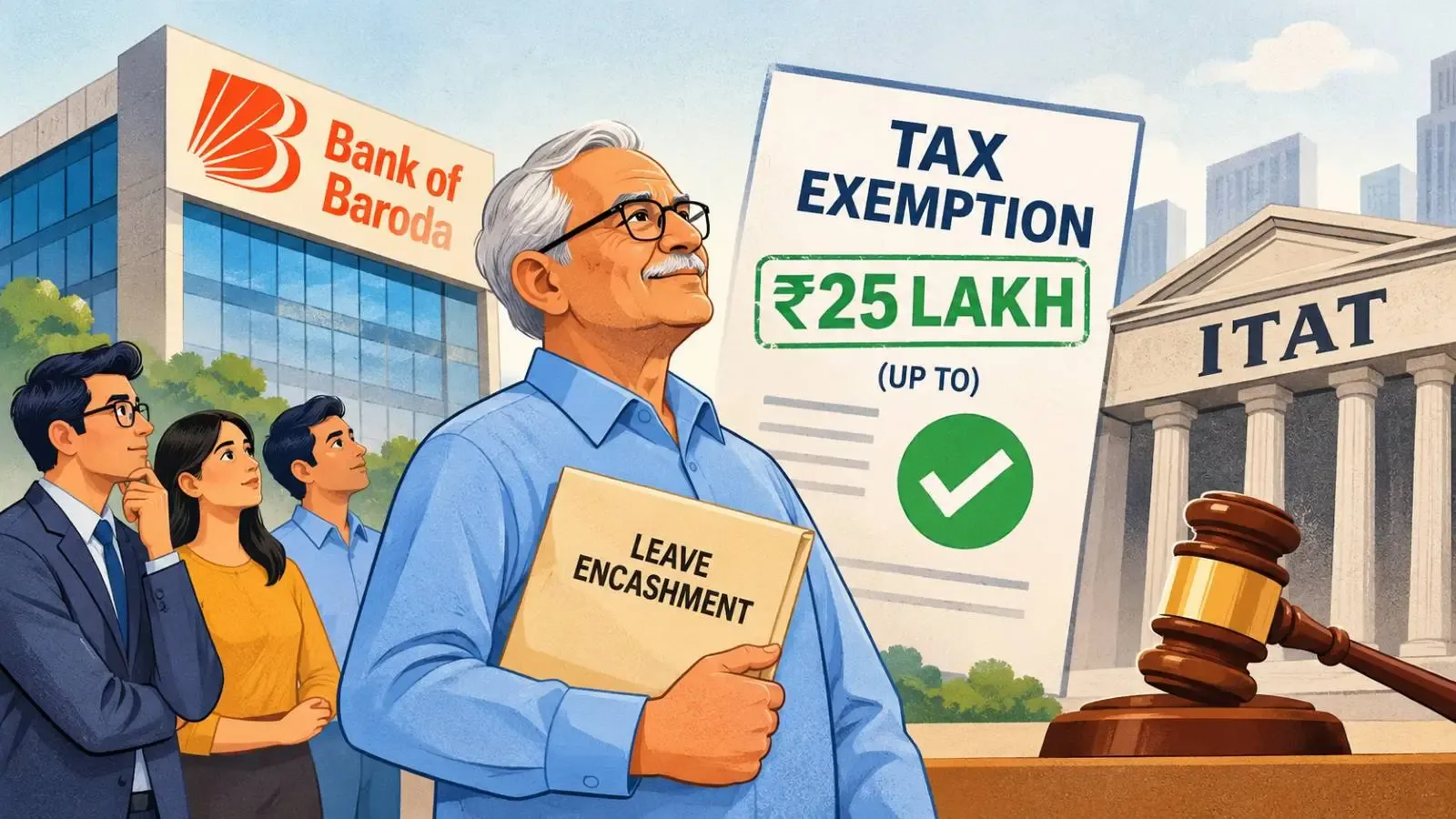
Employees who retired before the government increased the leave encashment tax exemption limit to ₹25 lakh can still claim the full exemption, the Income Tax Appellate Tribunal (ITAT) has ruled. This decision clarifies the tax treatment of leave encashment amounts received on retirement and benefits many employees whose exemption was earlier capped at ₹3 lakh.
- Mahesh Chand Methi retired from Bank of Baroda before the ₹25 lakh exemption was introduced.
- He received ₹9,54,104 as leave encashment and claimed full exemption in his tax return.
- The Income Tax Department allowed only ₹3 lakh exemption and taxed the rest.
- ITAT ruled that the enhanced exemption limit applies even for earlier retirements.
- This ruling benefits employees from banks, public sector undertakings, and private companies.
What was the background of Mahesh Chand Methi's case?
Mahesh Chand Methi, from Kota, Rajasthan, retired from the Bank of Baroda in the financial year 2019-20. At that time, the government had not yet increased the tax exemption limit on leave encashment to ₹25 lakh under section 10(10AA) of the Income-tax Act, 1961. Methi received ₹9,54,104 as leave encashment on retirement and claimed the entire amount as exempt from tax in his income tax return for assessment year 2020-21.
However, the Income Tax Department restricted the exemption to ₹3,00,000 and added the remaining ₹6,54,104 to his taxable income. Methi challenged this decision, arguing that he was entitled to the full exemption.
Why did the Income Tax Department limit the exemption to ₹3 lakh?
The Department relied on the notification and rules in place at the time of Methi's retirement, which capped the leave encashment exemption at ₹3,00,000 for employees other than those in the Central or State Government. The Additional Commissioner of Income Tax (Appeals) upheld this limit, stating that the exemption was subject to the monetary limit notified by the Central Government.
How did the ITAT justify allowing the full exemption?
The ITAT examined whether the enhanced exemption limit of ₹25,00,000, introduced by the Central Board of Direct Taxes (CBDT) Notification No. 31/2023 dated May 24, 2023, could apply to leave encashment received before the notification. The tribunal noted that several coordinate benches had allowed the benefit of the increased limit even for earlier years.
The tribunal relied on previous rulings, including Renu Moongia v. ITO and others, which held that while a CBDT circular cannot override the statute, it can relax its provisions to benefit the taxpayer. Since the increased limit benefits the assessee, the tribunal applied the ₹25 lakh exemption to Methi's case.
As Methi's leave encashment amount was below the enhanced limit, the tribunal allowed the full exemption, overturning the Department's decision.
What are the key takeaways from this ruling?
- Employees who retired before the ₹25 lakh exemption was introduced can claim the higher exemption limit.
- The ruling applies to employees of banks, public sector undertakings, and private companies.
- Tax authorities cannot restrict the exemption to ₹3 lakh if the enhanced limit benefits the taxpayer.
- The decision follows a trend of tribunals supporting taxpayers in similar cases.
- Taxpayers should consider this ruling when filing returns or appeals related to leave encashment.
Frequently Asked Questions
Q: Does this ruling apply to all employees who retired before 2023?
A: Yes, the ITAT ruling suggests that employees who retired before the ₹25 lakh exemption was introduced can still claim the full exemption, subject to the provisions of section 10(10AA) of the Income-tax Act.
Q: What is leave encashment?
A: Leave encashment is the payment an employee receives for unused leave at the time of retirement or resignation. It is often subject to tax exemptions up to certain limits.
Q: How does this affect my tax filing?
A: If you received leave encashment before the ₹25 lakh exemption was introduced and were taxed on amounts above ₹3 lakh, you may be able to claim a refund or file an appeal based on this ruling.
Q: Is this exemption available only to government employees?
A: No, section 10(10AA)(ii) covers employees of banks, public sector undertakings, and private companies, with the exemption subject to limits notified by the government.