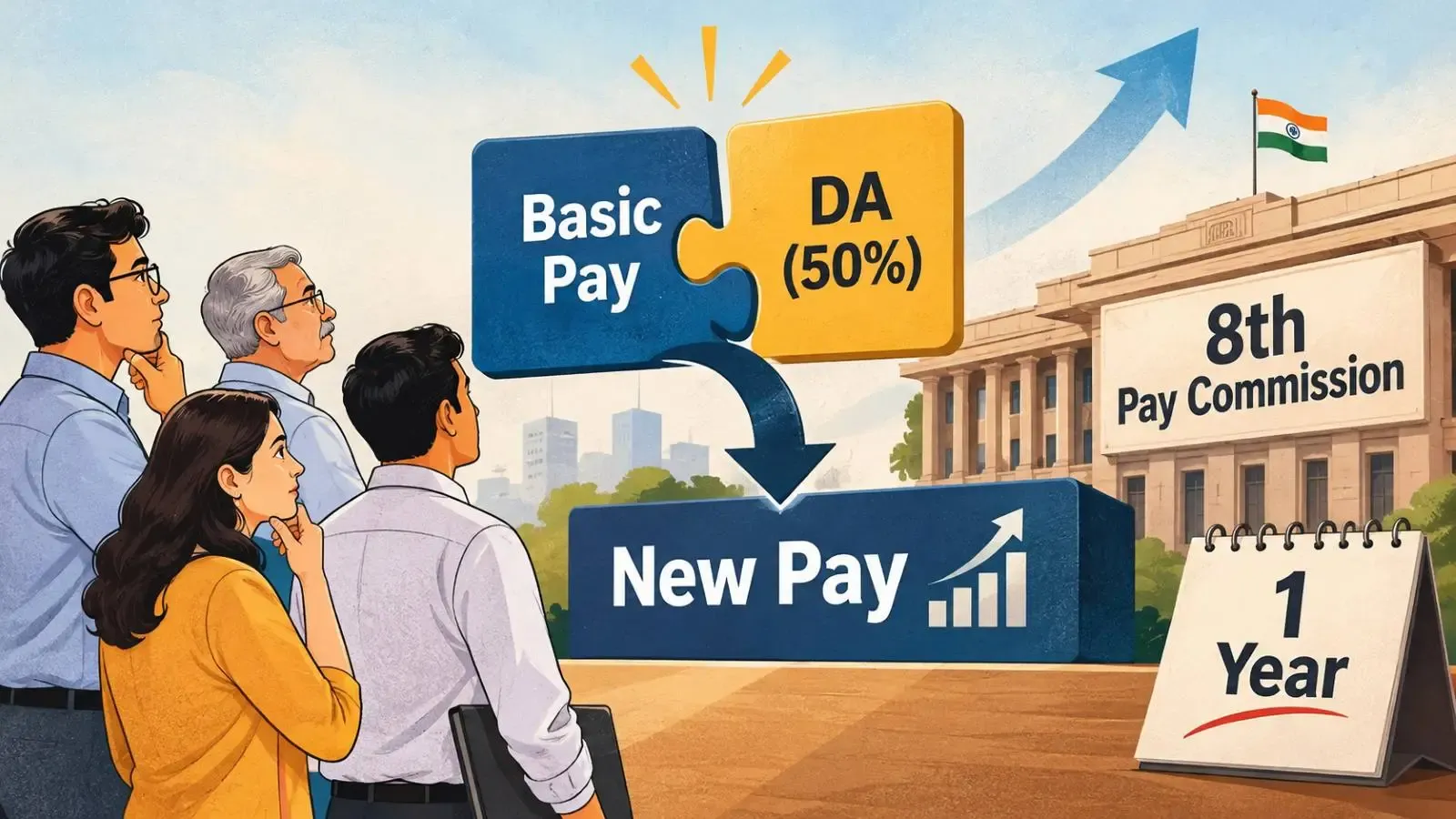
The 8th Pay Commission has completed one year, and a key demand has resurfaced: merging 50% of the Dearness Allowance (DA) with basic pay before determining the new pay structure. The Bharatiya Pratiraksha Mazdoor Sangh (BPMS) submitted this demand during its second interaction with the Commission on November 18, 2026. This merger could affect the pay and pension amounts for employees and pensioners under the 8th CPC.
- BPMS requests merging 50% of DA with basic pay before fixing the pay structure.
- Merging DA increases the base pay, leading to higher revised pay after applying the fitment factor.
- Previous pay commissions have handled DA merger differently, with the 7th CPC merging DA implicitly.
- BPMS wants the merger step to be visible and done prior to determining the pay structure.
- The 8th CPC’s deadline is May 2027, making timely decisions on DA merger crucial.
What is the demand regarding DA and basic pay merger?
The BPMS has asked that 50% of the existing Dearness Allowance be merged with basic pay and pension before the 8th Pay Commission determines the revised pay and pension structures. This means half of the DA amount would be added to the basic pay, increasing the base salary on which further calculations are made.
How does merging DA with basic pay affect employee salaries?
To understand the impact, consider a Level 6 employee with a basic pay of ₹44,900 and a DA rate of 63%, which amounts to ₹28,287. Merging half of this DA (₹14,144) into the basic pay raises it to ₹59,044, approximately 31.5% higher. When the fitment factor is applied to this increased base, the revised pay becomes significantly higher than it would be without the merger.
How have previous Pay Commissions handled DA merger?
The merger of DA with basic pay has a history dating back to the 5th Pay Commission, which recommended converting DA into Dearness Pay when the Consumer Price Index increased by 50%. The 6th Pay Commission refused to merge DA with basic pay, stating clearly that it does not recommend such a merger at any stage.
The 7th Pay Commission merged DA with basic pay implicitly by incorporating it into the fitment factor of 2.57. Of this, 2.25 accounted for merging DA assumed at 125% as of January 1, 2016, while the rest was the actual increase recommended.
Why does BPMS want the merger to be visible and done before determining the pay structure?
BPMS argues that the 7th CPC’s merger was implicit and based on an assumed DA rate, not the actual DA employees were receiving. By merging 50% of DA before fixing the pay structure, the step becomes transparent and ensures employees get the correct benefit. This approach also affects the base pay on which the fitment factor is applied, potentially increasing pay and pensions.
What other demands has BPMS made alongside the DA merger?
In addition to the DA merger, BPMS has proposed several related demands:
- Maximum-to-minimum pay ratio should not exceed 1:10.
- Annual increment rate should increase from 3% to 6%.
- Coverage under the Central Government Employees Group Insurance Scheme (CGEGIS) should increase from ₹30,000 to at least ₹15 lakh.
- Risk allowance should be raised to ₹10,000 per month.
When will the 8th Pay Commission finalize its recommendations?
The 8th Pay Commission was constituted on November 3, 2025, with an 18-month deadline ending in May 2027. Since the DA merger affects the base pay used to calculate the fitment factor, it must be decided before the final pay structure is fixed. BPMS has raised the merger issue early to ensure it is addressed in time.